Blog

Who Are the Top Quartz Countertop Manufacturers in China?

China’s quartz countertop sector merits careful comparison, not a simple ranking. Buyers should examine slab consistency, color control, fabrication support, and documented quality systems. A polished showroom sample can look uniform; a full slab may reveal shade variation near its edges.

Grand View Research estimated the global engineered stone market at about US$23.3 billion in 2023, with projected growth through 2030. This category includes more than quartz countertops, so its figure should not be treated as a direct measure of China’s quartz countertop output. It does, however, signal sustained demand for engineered surfaces. NKBA’s Kitchen Trends research also tracks countertop choices as part of changing kitchen design preferences. These sources offer context, not proof that any individual manufacturer is reliable.

Look closer. Ask each supplier for recent project references, technical specifications, sample-to-production consistency records, and clear warranty terms. Confirm whether the company manufactures slabs, fabricates finished counters, or coordinates both. Those roles are not interchangeable. For international buyers, packing standards and realistic lead times matter as much as a low quoted price.

NKBA CEO Bill Darcy’s broader kitchen-industry perspective can be paraphrased this way: “Good product decisions begin with understanding how people actually use their kitchens.” This is a paraphrase, not a verbatim quotation. The same practical lens helps assess Countertop Quartz suppliers: judge the material in real project conditions, not only in a catalog. China has capable producers, but public information varies, and rankings can overlook important differences. That uncertainty deserves attention.
Who Are the Top Quartz Countertop Manufacturers in China?

What Defines a Quartz Countertop Manufacturer?

A quartz countertop manufacturer does more than press mineral particles into slabs. It manages material selection, resin blending, forming, curing, and surface finishing. Consistency matters. Slabs should show even color, predictable thickness, and clean edges, with no obvious pits or weak spots. A capable producer checks these details under controlled lighting and records batch information. That record can help explain variations between samples and delivered slabs.

Technical knowledge also shows in practical guidance. A manufacturer should provide clear care instructions, fabrication limits, and guidance for sink cutouts and edge profiles. Ask how slabs are inspected and how defects are handled. Specific answers are more useful than broad claims. Some variation can occur between production batches, even with careful controls. No process is flawless. What matters is whether the company notices problems, communicates them plainly, and offers a consistent way to address them. Good documentation and responsive technical support are signs of a manufacturer that understands how its material performs beyond the factory floor.

How China’s Quartz Surface Industry Is Structured

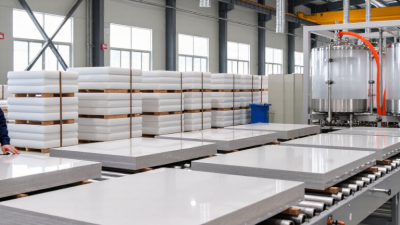
China’s quartz surface industry is made up of several connected layers, not one uniform group of manufacturers. Upstream suppliers provide mineral aggregates, pigments, and resin. Slab producers blend these materials, press them under vacuum, and cure the slabs before polishing and inspection. Some factories concentrate on large-scale production, while others handle custom colors, thicknesses, or finishing.

Production is clustered in regions with established stone-processing skills, equipment, and transport links. This can shorten the route from slab production to cutting and export, though logistics still vary by destination. Some suppliers sell slabs directly; others work through fabricators, trading companies, or project contractors. The commercial label “manufacturer” can therefore describe very different roles. That distinction matters.

Quality control happens at multiple stages. Buyers commonly review slab consistency, dimensions, surface finish, and test documentation, then compare samples with finished batches. A showroom sample is useful, but it cannot reveal every variation across a container. Ask how batches are identified and what inspection records are available. Not always. Factory capacity alone does not guarantee dependable delivery; communication, packaging, and corrective procedures matter too. The industry is capable, but its supply chains are not perfectly tidy, so clear specifications help both sides avoid costly assumptions.

Who Are the Top Quartz Countertop Manufacturers in China?

How China’s Quartz Surface Industry Is Structured

China’s quartz-surface industry includes slab producers and downstream fabricators serving countertop projects. Common nominal slab formats include standard slabs around 3000 × 1400 mm and jumbo slabs around 3200 × 1600 mm. Actual dimensions vary by producer; these format examples illustrate product scale, not manufacturer rankings or market share.

Profiles of Leading Quartz Countertop Manufacturers in China

China’s leading quartz countertop manufacturers are best compared by production capability, not showroom claims. Grand View Research estimated the global engineered stone market at USD 22.49 billion in 2023, with continued growth expected through 2030. That figure signals demand, but it does not rank Chinese factories. A useful profile starts on the production floor.

Large integrated manufacturers typically control slab pressing, curing, polishing, and inspection. Look for consistent slab thickness and clear batch records. Export-focused producers may offer a broader range of colors and custom sizes, while design-led factories often specialize in fine veining and book-matched patterns. Ask for samples from different production batches. A glossy sample can hide variation. Factory visits and independent test reports provide stronger evidence than catalog claims, though neither guarantees every shipment will match perfectly.

Tips: Request recent test results for water absorption, flexural strength, and stain resistance. Confirm what the report tested. Check slab edges under natural light, and ask how defects are handled. A small sample is helpful, but it cannot reveal every production issue.

How Chinese Manufacturers Differ in Products and Capabilities

Quartz countertop manufacturers in China differ more by production setup than by location. Large output alone says little about consistency or service. Some plants produce standard colors at high volume, while others handle smaller custom batches. A 20-mm slab and a 30-mm slab may share a pattern but differ in weight, edge options, and installation needs. Buyers should compare slab dimensions, thickness tolerance, and resin distribution, not just showroom photos.

Some facilities use automated polishing and calibrated presses; others rely more on operator adjustments. That matters. When color matching is critical, ask for slabs from the same production lot and inspect them under neutral light. A sample can flatter. Veining may shift across a full slab, and surface gloss can look different beside a window. Useful quality records may include batch identification, dimensional checks, and test results for water absorption or strength. Confirm that any report matches the product being offered.

Export capability is another dividing line. Some suppliers coordinate crate design, container loading, and replacement-piece requests; others mainly sell factory-gate stock. Check packing photos and clarify how chipped corners or delayed batches are handled before ordering. Fast replies help, but they do not prove production control. A factory visit, independent inspection, or small trial order can reveal gaps that a brochure misses.

Who Are the Top Quartz Countertop Manufacturers in China? - How Chinese Manufacturers Differ in Products and Capabilities

Comparison Dimension Large-Scale Integrated Manufacturer Design-Led Manufacturer OEM / Private-Label Manufacturer Project-Oriented Supplier
Typical business focus High-volume production for distributors and multiple export markets. Distinctive colors, surface patterns, and coordinated product collections. Producing to a buyer’s specifications, packaging requirements, or private-label program. Supplying slabs or fabricated components for residential and commercial projects.
Common product range Engineered quartz slabs in commonly requested colors, finishes, and thicknesses. Broader selection of colors and patterns, including designs that imitate natural stone. Products selected or developed to meet the buyer’s agreed specifications. Quartz surfaces chosen for a project’s design, quantity, and installation requirements.
Customization Usually strongest in repeatable specifications and established product lines. Often emphasizes color development, pattern variation, and collection updates. Can support specification, labeling, and packaging customization, subject to order requirements. May coordinate edge profiles, cut-outs, dimensions, and other fabrication details through the project supply chain.
Production capability Typically structured for consistent output across larger, repeat orders. May balance production volume with design variety and more frequent product changes. Production planning depends on the buyer’s specifications, order size, and approved samples. Capability depends on whether the supplier provides slabs only or also coordinates fabrication.
Quality-control priorities Batch consistency, surface finish, dimensional checks, and production traceability. Color and pattern consistency, finish quality, and sample-to-production matching. Conformity to approved specifications, labeling accuracy, and packaging checks. Slab selection, measurement accuracy, fabrication checks, and delivery coordination.
Export and logistics Often experienced in containerized slab shipments and export packing. Can offer varied collections; availability and lead times depend on the selected designs. Can align documentation and packaging with buyer requirements, subject to confirmation. May coordinate project schedules and shipments; fabricated goods require careful protective packing.
Best suited to Buyers prioritizing stable supply and repeat orders. Buyers prioritizing design variety and differentiated appearance. Importers or retailers seeking products made to defined specifications. Contractors, fabricators, or developers coordinating specific project needs.
Points to verify before ordering Available capacity, current specifications, batch controls, and shipment schedule. Physical samples, production-batch variation, and continued availability of selected designs. Written specifications, sample approval, order minimums, and private-label terms. Responsibility for measurement, fabrication, installation coordination, and replacement handling.

Note: These are general manufacturer capability profiles, not a ranked list of individual companies. Capabilities vary by factory, product line, and order. Engineered quartz is commonly made from mineral aggregates, resin, and pigments; confirm product composition, technical data, samples, and applicable certifications directly with each supplier.

What to Consider When Choosing a Quartz Countertop Manufacturer

Choosing a quartz countertop manufacturer requires more than comparing colors and prices. Ask how the company controls raw material selection, pressing, curing, and surface finishing. A polished sample is useful, but it cannot show how an entire production batch will look. Request current technical data for stain resistance, water absorption, and strength. Details matter.

Review several full-size slabs under natural and indoor lighting. Small samples may hide veining changes, shade variation, or defects near the edges. Ask how slabs are inspected and what happens if a shipment differs from the approved sample. Clear answers are a good sign. Vague promises are not. It is easy to overvalue a low quote before checking what it excludes.

Confirm slab dimensions, thickness tolerances, packaging, lead times, and after-sales procedures in writing. Ask whether the manufacturer can provide inspection records and a clear warranty description. A dependable supplier should explain care limits, including how prolonged heat may affect the surface. Check communication, too: slow or unclear replies before an order may cause avoidable confusion later. A little doubt is healthy; verify claims rather than relying on attractive photos.