Why Choose Quartz Stone Countertops?
Quartz Stone Countertops appeal to homeowners who want a clean, consistent surface without the upkeep associated with some natural stones. In Houzz’s 2024 U.S. Houzz & Home study of kitchen renovations, quartz was the most commonly selected countertop material, chosen by 42% of surveyed homeowners. That figure reflects renovation choices, not every household’s needs. Still, it helps explain why quartz appears in so many kitchen plans.
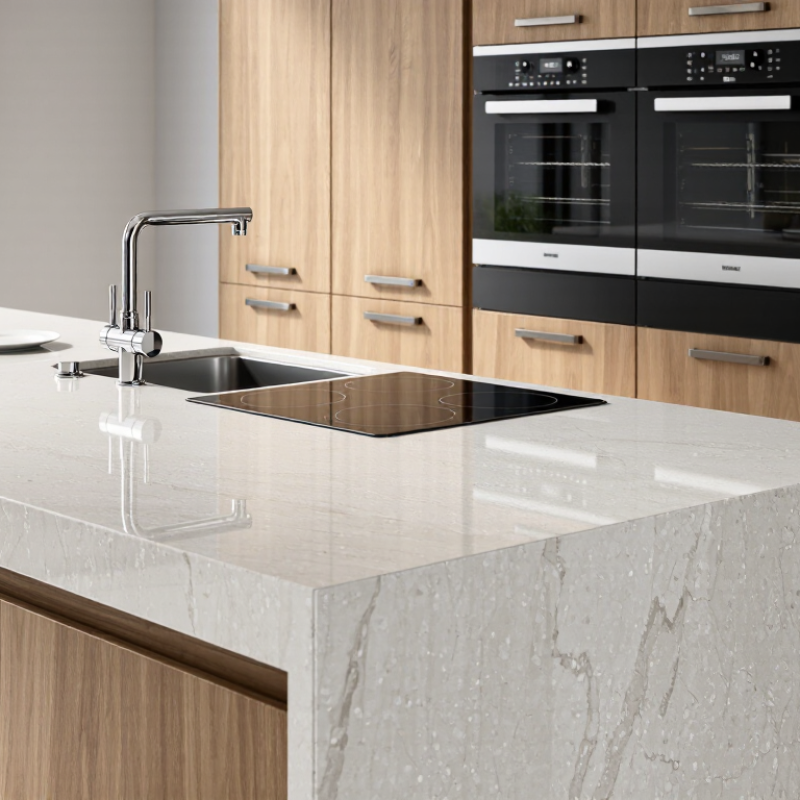
Its appeal is practical. Engineered quartz is made from mineral particles and binding resins, creating a surface with repeatable colors and patterns. Many varieties resist everyday stains, and routine cleaning usually requires only mild soap and water. Imagine wiping coffee from a pale island before guests arrive. Convenient. Yet quartz is not indestructible. The resin can be damaged by excessive heat, so hot pans need trivets; seams, edges, and installation quality also affect the finished look. These details are easy to overlook in a showroom.
The National Kitchen & Bath Association’s 2024 Kitchen Trends Report offers another useful industry reference: it tracks preferences among design professionals, rather than measuring every homeowner’s purchases. Read alongside Houzz’s consumer survey, it provides context for the material’s popularity without making it a universal recommendation. Quartz may suit busy kitchens, but it can cost more than some alternatives and cannot match every natural stone’s variation. That trade-off deserves thought. A good choice depends on budget, cooking habits, desired appearance, and the fabricator’s specifications—not popularity alone.
What Engineered Quartz Contains: Many Slabs Are 90%+ Mineral
Why Choose Quartz Stone Countertops?
What Engineered Quartz Contains: Many Slabs Are 90%+ Mineral
Engineered quartz is made from mineral particles, commonly including quartz, mixed with resin, pigments, and other additives. Many slabs contain more than 90% mineral material by weight, though the exact proportion varies by product. The mineral content gives the surface its hard, stone-like feel. Resin binds the particles together and helps create a consistent finish. Small chips of glass or other minerals may also appear in some designs.
That high mineral percentage sounds simple, but it does not tell the whole story. Two slabs with similar mineral content can differ in color, texture, resin type, and performance. A polished sample under showroom lights may also look different beside a kitchen window. I would treat “90%+” as a useful general guide, not a guarantee about every slab. Ask for product-specific composition and care information, and check a full-size sample if possible. Seams and edge details matter, too; they can affect the finished look more than a small sample suggests.
Tips: Place a sample near your cabinets and window, then view it in morning and evening light. Ask your fabricator about seams, edge options, and safe dust controls during cutting. Don’t rely on the percentage alone.
Why Quartz Resists Scratches: The Mineral Rates 7 on the Mohs Scale
Quartz is often chosen for countertops because it combines a clean, consistent appearance with good everyday durability. The mineral quartz rates 7 on the Mohs scale, which compares how well materials resist scratching. For context, it is harder than common household materials such as glass and many metals. That helps explain why quartz surfaces can handle routine kitchen use without scratching easily.
A countertop made from engineered quartz is not a solid slab of pure mineral. It typically contains quartz particles held together with resin and pigments, so its performance depends on the finished material, not just the mineral’s Mohs rating. Resistant does not mean scratch-proof. Dragging a rough ceramic pot across the surface may still leave a mark, and a metal utensil can sometimes leave a deposit that looks like a scratch. I’ve found that a quick, gentle check with a soft cloth can help distinguish residue from actual damage. It’s not always obvious.
Tips: Use a cutting board, lift cookware instead of sliding it, and clean marks with a soft cloth. Avoid abrasive pads; they can dull the finish over time.
How Quartz Handles Stains: Check Product-Specific Absorption Data
Quartz countertops are often called nonporous, but that label does not tell you how a specific slab handles stains. Check its technical data sheet for water absorption and the test method. ASTM C97/C97M describes measuring absorption by comparing a dry stone specimen with its water-saturated weight. A reported absorption of 0.05% means a 1-kilogram test specimen gained about 0.5 grams of water. Treat that as a measurement, not a stain-proof guarantee; the standard is a test method, not a universal performance threshold.
Stain resistance also depends on resin, pigments, finish, and exposure time. Coffee left beside a sink overnight is a tougher test than a quick splash wiped away. I would not compare percentages unless the products used comparable methods and conditions. Ask for the actual report, not just “low absorption” in sales copy. Some details may still be missing.
Tips: Request product-specific absorption results and confirm the test method, specimen condition, and report date. Check care instructions for oils, wine, and acidic spills, too. A low result helps, but prompt cleanup still matters.
Quartz in the Kitchen: Compare Durability, Heat Limits, and Maintenance
Quartz surfaces combine crushed natural quartz with resin and pigments. This engineered structure gives kitchens a consistent, nonporous work surface, but it does not make the countertop indestructible. A dropped cast-iron pan can chip an edge, especially near a sink cutout. Edges are vulnerable.
Heat behavior needs care. Resin can discolor or crack under sudden, concentrated heat, and there is no single safe temperature for every slab. Set hot cookware on a trivet, even during a rushed dinner. Heat damage may last. Compared with many porous natural stones, quartz usually avoids routine sealing.
Coffee, tomato sauce, and cooking oil are easier to wipe away before they dry. Use a soft cloth, warm water, and mild dish soap; gritty pads can dull the finish. Harsh cleaners may affect resin, so check the care guidance supplied with the slab. Small repairs are not always invisible. For a working kitchen, judge the whole installation, not just the polished sample. Ask how seams, exposed corners, and areas beside the cooktop will be handled. Quartz rewards ordinary care, not careless heat.
Fabrication Safety: OSHA Sets a 50 μg/m³ Silica PEL for Workers
Quartz countertops can look solid and quiet on a showroom slab. Fabrication is different. Cutting, drilling, and edge polishing may release respirable crystalline silica, fine dust that can reach deep into the lungs. OSHA’s permissible exposure limit (PEL) is 50 μg/m³, averaged over an eight-hour workday. It is a legal exposure limit, not a promise that every task is risk-free.
For fabrication shops, the limit shapes everyday work practices. Water-fed tools and local exhaust ventilation can reduce dust at its source. Use suitable HEPA-filtered vacuums or wet cleanup instead of dry sweeping. Dust travels. Employers should assess exposures, train workers, and maintain a written exposure control plan where required. Respirators may be needed when engineering and work-practice controls cannot adequately limit exposure.
A clean apron and polished surface do not reveal what a worker breathed during a shift. That is easy to miss. Equipment checks, clear records, and honest conversations about clogged filters or rushed cleanup matter. OSHA also sets an action level of 25 μg/m³ as an eight-hour average, which triggers certain requirements. Requirements vary by work setting. Shops should verify procedures against current OSHA guidance and qualified safety advice.