China Top Quartz Kitchen Countertop Manufacturers
China’s quartz surface industry has become a major sourcing center for residential and commercial projects. Quartz Kitchen Countertops now combine engineered consistency, practical maintenance, and broad design flexibility. Grand View Research estimates that the global quartz market reached approximately USD 11.5 billion in 2023, with continued growth expected through 2030. This figure covers several applications, not countertops alone. That distinction matters.
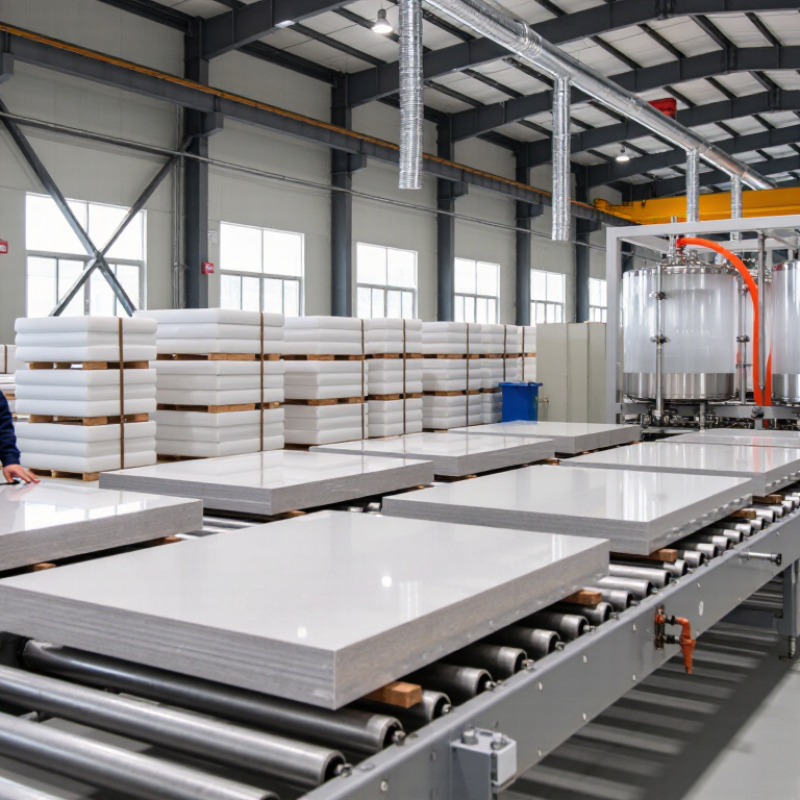
The Freedonia Group’s Countertops industry analysis identifies quartz surfaces as a strong competitor to natural stone and solid-surface materials. Buyers increasingly compare slab appearance, thickness, edge finishing, lead times, and installation support. In a Chinese factory, these details appear on the production floor: calibrated slabs, resin mixing systems, polished edges, and protective packaging. Small variations can affect an entire kitchen island.
Quality is not only visual. It includes documented testing, batch traceability, dimensional accuracy, and responsible workplace controls. The U.S. Occupational Safety and Health Administration has highlighted respirable crystalline silica risks during cutting and fabrication. Reliable manufacturers should therefore explain wet-processing methods, dust-control procedures, and worker protection. Certifications help, but they do not replace verification.
This guide examines China’s leading quartz countertop manufacturers through a practical sourcing lens. It considers product consistency, customization, export experience, technical documentation, and after-sales communication. Some rankings remain subjective. Factory claims can also change. Independent samples, current certificates, and project references deserve careful review before any purchase decision.
Quartz Countertops: Composition, Features, and Kitchen Applications
China Top Quartz Kitchen Countertop Manufacturers
Quartz Countertops: Composition, Features, and Kitchen Applications
Quartz countertops are engineered surfaces, not solid slabs of natural quartz. Most contain about 90% to 95% quartz minerals. The rest usually includes resin binders, pigments, and performance additives. This mixture creates consistent color and predictable patterns. During production, vacuum pressing reduces air pockets and improves slab density. Small variations still occur, especially around veining and edge profiles.
The surface is nonporous, so spilled coffee, cooking oil, and tomato sauce usually stay near the surface. A soft cloth and mild detergent often remove them. It resists everyday scratches better than many softer countertop materials. However, it is not indestructible. Direct contact with hot pans can damage the resin. Use a heat pad, even during quick cooking tasks. Dark colors may also show fingerprints and fine dust more clearly.
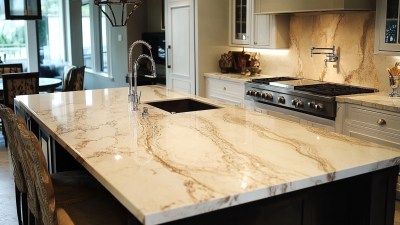
In kitchen applications, quartz works well for islands, preparation counters, backsplashes, and integrated work zones. Standard slab thicknesses support common cabinet layouts, while reinforced edges suit seating areas. Professional installers measure walls, appliances, and sink openings carefully. Uneven cabinets can create stress beneath the slab. Seam placement deserves attention. A seam beside a sink may become more noticeable after repeated moisture exposure. Careful fabrication matters as much as the material itself.
How China’s Quartz Countertop Manufacturing Industry Developed
China’s quartz countertop industry grew from imported production technology into a large, export-oriented manufacturing sector. Over the past two decades, factories developed in stone-processing regions with access to resin, minerals, skilled labor, and port logistics. Automated pressing, curing, polishing, and CNC cutting improved consistency. Production became faster, but quality still depends heavily on formulation control and curing discipline.
Market data reflects this expansion. Grand View Research valued the global engineered stone market at approximately US$25.96 billion in 2022 and projected a 5.6% compound annual growth rate from 2023 to 2030. Quartz surfaces gained attention because they offer consistent patterns, low water absorption, and easier maintenance than many natural stones. China’s manufacturing advantage also comes from flexible customization, including slab sizes, edge profiles, and tailored color matching.
The progress is not perfect. Some factories still struggle with shade variation, resin stability, and dust control during fabrication. These issues matter on a bright kitchen island. Reported market figures also vary because analysts classify engineered stone differently. That limitation deserves attention. Reliable manufacturers now invest in laboratory testing, batch records, water-absorption checks, and standardized inspection before shipment. According to ISO 10545-3 testing principles, water absorption is a measurable performance indicator, not a marketing phrase. Better documentation is helping China’s quartz sector move from volume production toward more dependable, specification-led manufacturing.
China Top Quartz Kitchen Countertop Manufacturers - How China’s Quartz Countertop Manufacturing Industry Developed
An overview of the industry’s development, manufacturing practices, and market context. The timeline uses broad periods rather than unsupported production or market-share estimates.
| Period |
Industry development |
Manufacturing changes |
Market and product context |
| Late 20th century |
Engineered quartz surfaces emerged internationally as an alternative to natural stone, combining mineral aggregate with a resin binder. |
Manufacturers developed processes to blend, compact, cure, and finish mineral-based slabs. |
The material offered more consistent patterns than many natural stones and was adopted for interior surfaces, including countertops. |
| 2000s |
China’s engineered-stone sector expanded alongside the country’s wider building-materials and construction industries. |
Production increasingly focused on repeatable slab dimensions, surface finishing, and a broader range of colors and patterns. |
Domestic construction demand and international trade supported the growth of manufactured surface products. |
| 2010s |
The industry became more export-oriented, serving overseas fabricators, distributors, and construction projects. |
Greater use of automated handling, polishing, inspection, and cutting equipment helped improve throughput and production consistency. |
Demand favored a wider choice of finishes and designs, while buyers paid closer attention to specifications, packaging, and delivery reliability. |
| Late 2010s–2020s |
International attention to respirable crystalline silica exposure increased scrutiny of engineered-stone fabrication and installation practices. |
Dust-control measures—including wet processing, local exhaust ventilation, housekeeping controls, and appropriate respiratory protection—became important safety considerations. |
Importers and project teams increasingly considered worker safety and compliance alongside appearance, price, and performance. |
| Current industry priorities |
Competition centers on product consistency, technical documentation, service, and the ability to meet varied project requirements. |
Manufacturers continue to refine process control, quality inspection, resource efficiency, and safer production practices. |
Buyers commonly assess slab dimensions, thickness tolerance, finish, stain and scratch performance, test documentation, and supply-chain reliability. |
Note: Engineered quartz is a composite material; its formulation and performance vary by product. Fabrication safety requirements depend on the applicable local regulations and work practices.
Key Standards for Evaluating Chinese Quartz Countertop Manufacturers
Key Standards for Evaluating Chinese Quartz Countertop Manufacturers
Choosing a quartz countertop manufacturer takes more than comparing sample colors. Ask for a current technical data sheet covering quartz content, resin type, thickness tolerance, water absorption, and stain resistance. Reliable suppliers should explain how these figures are tested and provide recent, traceable reports. A polished sample is useful, but it cannot show how a slab performs after years of kitchen use.
Check production controls in person or through a detailed factory audit. Look for consistent slab thickness, even polishing, and clean edges around sink cutouts. Ask how workers inspect slabs for cracks, color variation, and surface pits before packing. Request photographs of the actual production batch, not only showroom samples. Clear answers matter. Vague claims deserve follow-up. Even careful inspections cannot remove every natural variation, so agree on acceptable color differences before ordering.
Tips: Request two samples from the same batch and compare them in daylight. Confirm packaging dimensions, replacement procedures, and delivery timelines in writing. Ask who handles measurement errors. Small details can become costly later. One point is easy to overlook: a strong factory may still have uneven communication, so test response times before placing a large order.
Leading Manufacturer Profiles and Their Product Capabilities
China’s quartz countertop manufacturers generally fall into three capability groups. Integrated producers control quartz grading, resin mixing, vibration pressing, and curing, helping maintain consistent slab color across larger orders. Their catalogs often include polished, honed, and veined finishes, with custom thicknesses available for project specifications. Smaller specialist factories may offer more flexible cutting and edge profiles, but buyers should verify slab consistency between batches.
The market is substantial: Grand View Research valued the global engineered stone market at USD 25.64 billion in 2022 and forecast 5.3% annual growth from 2023 to 2030.
That broader category includes more than quartz, so it is not a quartz-only sales measure. Still, it signals demand for dependable production and varied designs.
Details matter. Compare manufacturers’ current test reports for water absorption, flexural strength, and stain resistance, and request samples from the same production batch. Published capacity figures are rarely comparable, and showroom samples can conceal variation across full slabs. Ask how factories control color, inspect finished surfaces, and handle replacement pieces. Those answers reveal more than a polished catalog.
Purchasing, Quality Inspection, and Import Considerations in China
China’s quartz countertop market offers broad choices, but a low quotation means little without a clear specification. Grand View Research estimated the global engineered stone market at about US$22.4 billion in 2023, reflecting substantial demand and supplier variety. Ask each factory for slab thickness, dimensional tolerances, resin content, batch consistency, and written test results. Request matching samples from the production lot, not just a showroom piece. Check polished edges under direct light; small chips and uneven gloss are easy to miss. Small checks matter.
A practical inspection should compare several slabs for color variation, voids, scratches, and edge quality, then verify dimensions and packing before shipment. A third-party inspector can photograph labels, crate condition, and container loading. One detail buyers sometimes overlook: test results are useful only when the method and sample are identified. Ask the supplier to state both. I would also confirm the customs tariff classification, shipping terms, insurance, and required import documents with a qualified broker before paying the balance. Container delays can turn a good factory price into an expensive purchase. There is no perfect inspection; even a careful check cannot guarantee every slab will match the sample.
China Quartz Kitchen Countertop Purchasing & Import Checklist
Practical control points to review when sourcing engineered quartz countertops from China.
The bars count the checklist items shown for each stage; they are a planning aid, not industry statistics. Confirm product specifications, test requirements, tariff classification, and import rules for your destination market.