Top 10 Natural Stone Countertops Suppliers Worldwide
Natural Stone Countertops remain a premium choice for kitchens, bathrooms, hotels, and luxury developments worldwide. Each slab carries visible geological evidence: veins, mineral flecks, fossil marks, and uneven color. No two surfaces are identical. That beauty also creates responsibility. Buyers must examine quarry origin, sealing requirements, fabrication quality, and long-term maintenance before comparing suppliers.
Industry data supports continued demand. Grand View Research estimates that the global natural stone market will grow steadily through 2030, supported by residential renovation and commercial construction. The U.S. Geological Survey’s Mineral Commodity Summaries also identifies dimension stone as an established construction material with ongoing international production. However, broad market figures do not fully represent countertop sales. This is an important limitation. Reports often combine flooring, cladding, monuments, and worktops, making direct supplier comparisons imperfect.
The Natural Stone Institute provides technical guidance on stone selection, installation, care, and performance. Jim Hieb, the institute’s chief executive officer, has emphasized, “Natural stone is a product of nature, and each piece is unique.” That simple observation matters when evaluating the top suppliers. A reliable company should provide consistent grading, accurate slab photography, documented sourcing, suitable sealers, and responsive technical support. A polished showroom is not enough.
This ranking considers more than price. It examines quarry access, material range, processing capability, export experience, sustainability documentation, and customer service. Some suppliers may appear strong on paper but perform differently by region. Lead times change. Colors vary between shipments. Even experienced buyers can misjudge a sample. The following list offers a practical starting point, not an unquestionable verdict, for sourcing Natural Stone Countertops worldwide.
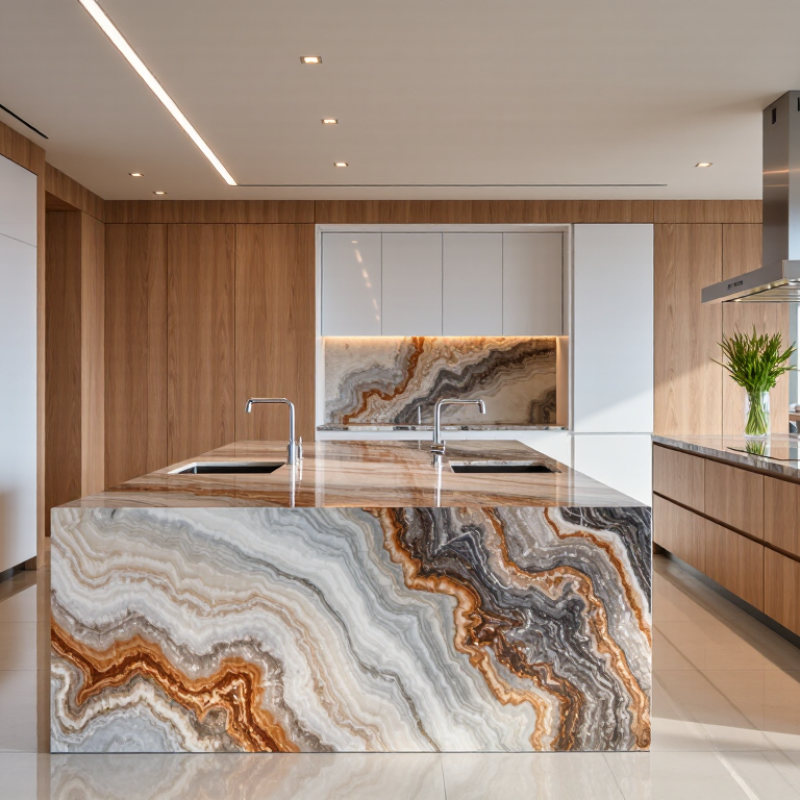
How Natural Stone Countertops Are Evaluated Worldwide
How Natural Stone Countertops Are Evaluated Worldwide
Natural stone countertops are judged by more than color and origin. A
2023 Grand View Research report estimated the global natural stone market at about
US$50.6 billion. This scale makes consistent evaluation essential. Buyers and suppliers usually examine
water absorption, flexural strength, abrasion resistance, surface defects, and processing quality.
Testing often follows recognized methods, including
ASTM C97 for absorption and density, and
ASTM C880 for flexural strength. A low absorption rate matters near sinks, where repeated moisture can enter tiny pores. The U.S. Geological Survey reported approximately
1.9 million metric tons of U.S. dimension stone production in 2023. That figure shows the sector’s industrial scale, but it does not guarantee countertop performance.
Practical inspection should include the slab’s
back, edges, seams, and polished face.
Hairline fissures may appear only under angled light. Thickness should remain consistent after cutting. Experienced fabricators also check whether a pattern can continue across joints without awkward breaks.
Appearance can deceive. A dramatic vein may weaken a narrow overhang. However, test results are not perfectly comparable across laboratories or stone types. Climate matters too; a material suitable for a dry interior may need stronger sealing in humid regions. Evaluation should combine
laboratory evidence, fabrication records, installation conditions, and honest disclosure of natural variation.
Key Criteria for Selecting Leading Stone Suppliers
Choosing among the top natural stone countertop suppliers requires more than comparing attractive photographs. In practice, reliable suppliers provide clear quarry information, current test reports, and consistent technical specifications. Ask about water absorption, flexural strength, stain resistance, and freezing performance when relevant. Details matter.
Inspect full slabs, not only small samples. Natural stone can change in veining, tone, thickness, and surface movement from one block to another. A polished sample can mislead. Leading suppliers explain acceptable variation before purchase and provide batch photographs or digital slab records. They should also describe their inspection process, edge protection, crate construction, and delivery schedule.
Traceability strengthens supplier credibility. Look for documented sourcing, responsible quarry practices, worker safety policies, and transparent environmental information. Request references from fabricators or contractors who received similar quantities. Ask how claims are handled when slabs arrive chipped, warped, or incorrectly finished. Their answer often reveals more than a sales presentation. No supplier is flawless, and overly perfect promises deserve caution. A dependable partner admits limitations, records problems, and corrects them quickly. Confirm whether technical staff can answer installation questions without vague replies. Written warranties, invoice details, and agreed tolerances create useful protection. Cheap pricing may conceal weaker packaging, inconsistent grading, or delayed replacement stock. A careful comparison should include the delivered slab, not just the quoted material.
Top 10 Natural Stone Countertops Suppliers Worldwide
Key Criteria for Selecting Leading Stone Suppliers
The chart presents a practical procurement benchmark for comparing natural stone countertop suppliers. Product quality, consistency, delivery reliability, technical support, sustainability, and compliance are among the most important factors when evaluating international stone partners. The percentages represent recommended evaluation weights rather than data from any individual company or brand.
Profiles of the Top 10 Natural Stone Countertop Suppliers
The leading natural stone countertop suppliers differ in stone access, fabrication skill, and service depth. A Mediterranean marble supplier may offer soft veining, precise slabs, and decades of quarry knowledge. A Brazilian granite supplier often provides dense surfaces with dramatic mineral movement. One quartzite specialist focuses on hardness testing and bookmatched layouts. Its samples feel cold and heavy.
A North American limestone supplier usually serves restoration and custom residential projects. A Turkish travertine supplier may provide filled, honed, or brushed finishes for warmer interiors. An Indian granite supplier often combines broad color selection with competitive container logistics. An African stone supplier can offer distinctive darker materials, but availability may change quickly. Always confirm current quarry production.
A European fabricator may stand out through waterjet cutting, tight seam control, and detailed installation drawings. An Asian export supplier often supports large hospitality orders and private-label packaging. A regional distributor completes the group by offering faster replacement slabs and local measurement services. These profiles are practical, not absolute. Some catalogs look impressive online, yet actual stock can be limited. Experienced buyers request recent slab photographs, absorption data, finish samples, and written care instructions. They also inspect edge quality, resin repairs, packing methods, and delivery records. No supplier is perfect. Natural variation, delayed vessels, and overlooked measurement errors still affect projects. Reliable partners explain those risks before accepting a deposit.
Stone Types, Finishes, and Customization Options
Top 10 Natural Stone Countertops Suppliers Worldwide
Stone Types, Finishes, and Customization Options
The natural stone market remains substantial. Grand View Research valued it at approximately USD 50 billion in 2023, with continued growth expected through 2030. That scale gives buyers many supplier choices, but quality still varies.
Granite suits busy kitchens because it resists scratching and heat. Marble offers distinctive veining, although acids can etch its surface. Quartzite often provides marble-like movement with stronger wear resistance. Limestone and soapstone create softer, warmer appearances. Ask suppliers for quarry origin, slab thickness, absorption results, and recent inspection records. The Natural Stone Institute recommends testing absorption and strength through recognized ASTM methods. Photos are not enough.
Finish changes both appearance and maintenance. Polished slabs reflect light and emphasize color. Honed surfaces feel quieter and hide small scratches better. Leathered finishes add texture, but crumbs may collect in deeper patterns. Flamed granite creates a rugged, outdoor-inspired surface. Some suppliers also provide brushed, sandblasted, or custom edge profiles. Waterfall edges, book-matched slabs, integrated drain grooves, and curved islands require precise digital templates. Small errors become expensive quickly.
The 2024 Houzz & Home Study shows that homeowners continue investing heavily in kitchen improvements, yet budgets are not unlimited. A polished sample may look perfect under showroom lighting. It can feel different beside a window. I would request full-size samples, batch photographs, and a written sealing schedule. Even experienced buyers sometimes overlook color variation. That is part of natural stone’s character, but it should never be treated as a surprise.