Blog

Top 10 Types of Granite Quartz for Global Buyers

Choosing the right Granite Quartz surface is rarely a simple color decision. Global buyers must compare appearance, performance, sourcing reliability, and long-term value. This guide examines ten popular types used in kitchens, hotels, offices, façades, and commercial interiors. It also explains an important terminology issue: granite is natural stone, while quartz commonly refers to engineered stone. In some markets, suppliers use “Granite Quartz” as a broad commercial phrase. That distinction matters.

Each selection will be considered through practical buying criteria. These include slab thickness, surface finish, water absorption, hardness, stain resistance, maintenance needs, and fabrication requirements. A white surface may brighten a small kitchen, but subtle veining can vary between batches. Dark granite may create strong visual contrast, yet it can show dust, fingerprints, or hard-water marks more clearly. Samples can mislead.

Experienced importers should request recent slab photographs, physical samples, test data, packing details, and clear inspection standards. Reliable suppliers should explain quarry or factory origins, production capacity, quality controls, and available certifications. Buyers should also confirm container loading methods and replacement policies before placing large orders. Small details matter.

The ranking is useful, but not absolute. Regional tastes, climate, budgets, and project specifications can change the best choice. Some recommendations may appear obvious, while others deserve closer review. A polished catalog never tells the whole story. This guide aims to provide balanced, evidence-informed direction for buyers who need attractive materials and dependable performance across international projects.
Top 10 Types of Granite Quartz for Global Buyers

Top 10 Granite and Quartz Types Classified by Mineral Composition and Origin

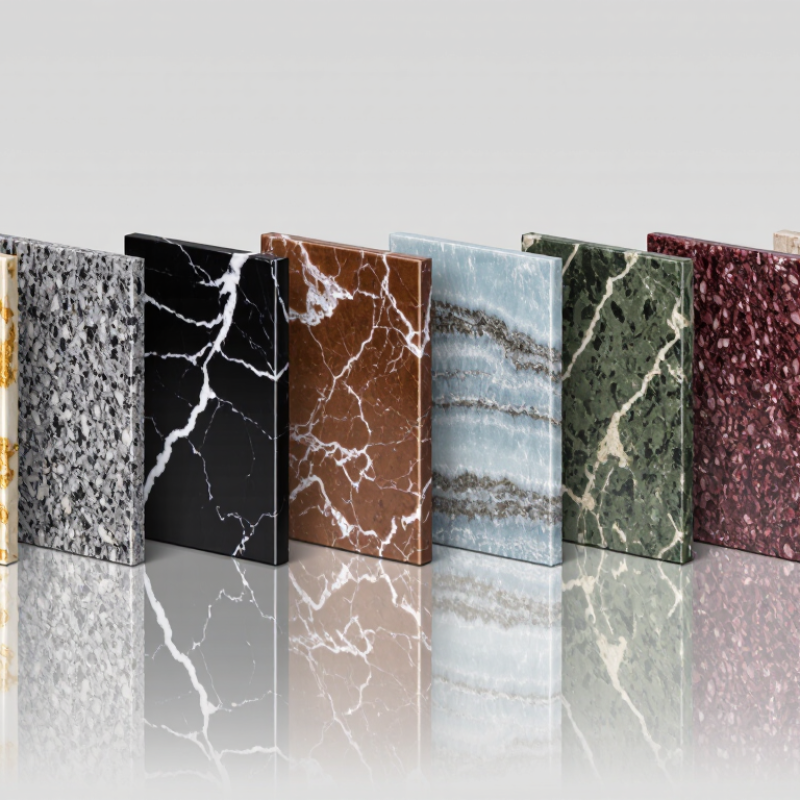
Granite and quartz should be classified by mineral composition and geological origin, not only by color. Biotite granite contains dark mica, feldspar, and quartz, creating black flakes across a pale surface. Hornblende granite has needle-like dark minerals and often shows stronger visual movement. Alkali-feldspar granite is rich in pink or cream feldspar, while rapakivi granite displays rounded feldspar crystals surrounded by darker rims. Blue-grey granite usually gains its tone from quartz, feldspar, and minor dark minerals, rather than naturally blue rock alone.

Quartz varieties reveal different formation conditions. Milky quartz contains microscopic fluid inclusions that scatter light and produce a cloudy white appearance. Smoky quartz receives its brown tone from natural radiation affecting aluminum-related defects. Rose quartz contains trace elements and microscopic inclusions, often creating a soft pink color. Amethyst gains purple hues from iron and irradiation, while citrine develops yellow to orange tones through heat-related changes in iron. Origin matters. Brazilian pegmatites, Indian granite belts, and Scandinavian shield rocks can produce noticeably different textures.

Buyers should request mineral data, quarry origin, slab photographs, and test results for water absorption and abrasion. A polished sample can hide weak veins or uneven grain. Classification is useful, but never perfect. Geological boundaries can overlap, and commercial names sometimes simplify complex stones. Experienced inspection remains necessary before large-volume purchasing.

Granite Versus Quartz: Mohs Hardness, ASTM C97 Absorption, and Durability Data

For global buyers, granite and engineered quartz should not be judged by appearance alone. On the Mohs scale, granite commonly measures about 6 to 7, because its quartz and feldspar minerals resist scratching. Engineered quartz usually falls within a similar range, although resin content and aggregate selection can change performance. Mohs values are comparative, not laboratory wear ratings. That distinction matters.

ASTM C97/C97M measures water absorption and bulk specific gravity. Under ASTM C615, granite dimension stone generally must remain at or below 0.40% absorption by weight. Many tested granite slabs perform well below that limit. Engineered quartz often records very low absorption, sometimes below 0.1% in technical data sheets. However, quartz surfacing is not natural stone, and its results depend on formulation, curing, and testing conditions. A neat ranking can mislead.

Real durability includes heat, impact, staining, and installation quality. The Natural Stone Institute’s technical guidance emphasizes that stone performance varies by mineral composition and fabrication. A dark granite with microcracks may fail sooner than a lighter, sound slab. Quartz can resist household stains effectively, yet prolonged heat or thermal shock may damage its resin binder. Ask suppliers for recent ASTM C97 reports, Mohs information, thickness, and batch-specific inspection records. Test data helps, but it cannot replace a close look at edges, seams, and support conditions.

Top 10 Granite and Quartz Types for Global Buyers

Comparative data for representative Mohs hardness and typical ASTM C97 water absorption values. Granite results vary by mineral composition and quarry source, while engineered quartz values vary by formulation and manufacturing quality.

How to read the chart: Higher Mohs hardness generally indicates better scratch resistance. Lower ASTM C97 absorption generally indicates lower porosity and improved resistance to water penetration, staining, and freeze-thaw damage.

Comparing Slab Thicknesses, Commonly 20 mm and 30 mm, for Global Projects

Top 10 Types of Granite Quartz for Global Buyers

For global projects, slab thickness can affect more than appearance. In practical installations, 20 mm quartz is often easier to handle, crate, and transport. It suits wall panels, bathroom vanities, and supported kitchen counters. However, the cabinet structure must remain level and properly reinforced. A thin slab is not automatically a weak slab.

Thirty-millimeter quartz creates a stronger visual edge and a more substantial countertop profile. It works well for islands, commercial reception desks, and areas with longer overhangs. Still, the extra weight increases handling demands and may raise shipping costs. Fabricators should check cutouts around sinks and cooktops carefully. Small errors become visible beside polished edges.

Edge details also change the decision. A laminated edge can make 20 mm material look thicker, but it requires accurate bonding and finishing. I have seen attractive installations fail because support planning came too late. That mistake is easy to repeat. For international buyers, confirm actual thickness tolerance, crate protection, slab dimensions, and installation standards before ordering. Local climate, cabinet design, and transport routes deserve equal attention. Sometimes 30 mm is chosen for appearance, although 20 mm would perform adequately with better support. That choice is not always wrong, but it deserves a cost and engineering review.

Top 10 Types of Granite Quartz for Global Buyers – Comparing Slab Thicknesses, Commonly 20 mm and 30 mm, for Global Projects
The categories below describe natural granite appearance groups. Granite is an igneous stone that commonly contains visible quartz, feldspar, and mica. Mineral content, color, water absorption, and availability vary by quarry and block; the figures are practical industry ranges rather than specifications for a single source.
No. Granite Type Typical Appearance Approx. Quartz Content Typical Density Typical Water Absorption 20 mm Slab 30 mm Slab Common Global Project Uses Purchasing Considerations
1 White Granite White to light gray background with black, gray, or pink mineral flecks. 20–35% 2.63–2.70 g/cm³ 0.20–0.60% Approx. 53–54 kg/m²; suitable for standard countertops, wall cladding, and vanity tops. Approx. 79–81 kg/m²; preferred for heavy-use counters, wide islands, and substantial edge profiles. Kitchens, bathrooms, hotel interiors, façades, flooring, and commercial reception areas. Inspect for resin filling, consistent background color, iron staining, and visible fissures.
2 Black Granite Deep black, charcoal, or black-and-gray granular structure; some varieties contain reflective minerals. 10–30% 2.65–2.75 g/cm³ 0.10–0.40% Approx. 53–55 kg/m²; effective for countertops and vertical applications when properly supported. Approx. 80–83 kg/m²; offers greater rigidity for large islands and thick-looking edge details. Countertops, monuments, flooring, façades, stairs, and high-traffic commercial spaces. Dark polished surfaces can show fingerprints, scratches, and water marks; evaluate finish consistency.
3 Gray Granite Light to medium gray background with black, white, or silver mineral movement. 20–40% 2.63–2.72 g/cm³ 0.20–0.60% Approx. 53–54 kg/m²; practical for residential and commercial surfaces. Approx. 79–82 kg/m²; useful where a deeper edge or increased slab stiffness is required. Flooring, stairs, exterior paving, kitchens, public buildings, and ventilated façades. Often offers a relatively uniform appearance, but shade variation between blocks should be checked.
4 Brown Granite Brown, coffee, or taupe base with cream, black, gold, or reddish mineral grains. 15–35% 2.63–2.72 g/cm³ 0.20–0.70% Approx. 53–54 kg/m²; suitable for standard horizontal and vertical installations. Approx. 79–82 kg/m²; supports robust kitchen islands and pronounced laminated edges. Kitchens, fireplaces, hospitality interiors, flooring, stairs, and exterior landscaping. Confirm color under project lighting; brown tones can vary substantially between quarry blocks.
5 Green Granite Green, olive, or gray-green background with darker veins or granular mineral patterns. 15–35% 2.63–2.75 g/cm³ 0.20–0.80% Approx. 53–55 kg/m²; appropriate for countertops and decorative cladding with suitable support. Approx. 79–83 kg/m²; advantageous for larger horizontal units and detailed edge treatments. Feature walls, countertops, flooring, memorial work, hotel interiors, and landscape elements. Some green stones include alteration minerals; verify stain resistance, finish stability, and sample match.
6 Blue-Gray Granite Blue-gray to steel-gray background with white, black, or silvery mineral contrasts. 20–40% 2.63–2.72 g/cm³ 0.20–0.70% Approx. 53–54 kg/m²; suitable for interior counters, walls, and carefully supported façades. Approx. 79–82 kg/m²; recommended for heavy-duty surfaces and deeper visual profiles. Premium interiors, reception desks, bathrooms, façades, feature flooring, and public spaces. Blue coloration may be linked to specific mineral combinations; approve a full-size slab when appearance is critical.
7 Pink Granite Pink, salmon, or rose background caused primarily by potassium-rich feldspar, with contrasting grains. 20–35% 2.60–2.72 g/cm³ 0.20–0.70% Approx. 52–54 kg/m²; suitable for countertops, wall panels, paving, and interior details. Approx. 78–82 kg/m²; useful for substantial counters, stairs, and heavy architectural elements. Public buildings, façades, monuments, flooring, kitchens, and landscape construction. Color intensity depends on feldspar content; review multiple lots for large projects.
8 Red Granite Red, burgundy, or rust-red background with black, gray, or cream mineral grains. 15–35% 2.60–2.72 g/cm³ 0.20–0.80% Approx. 52–54 kg/m²; suitable for cladding, flooring, monuments, and selected counters. Approx. 78–82 kg/m²; provides additional mass for stairs, monuments, and large horizontal units. Exterior façades, civic projects, monuments, paving, stairs, and feature walls. Check for iron-bearing minerals, oxidation risk, and compatibility with the intended exterior environment.
9 Beige Granite Warm beige, cream, or light tan background with brown, gray, or gold mineral movement. 15–35% 2.60–2.70 g/cm³ 0.20–0.80% Approx. 52–54 kg/m²; common for residential surfaces, walls, flooring, and vanities. Approx. 78–81 kg/m²; better suited to heavy counters and thicker edge profiles. Hotels, residential developments, bathrooms, flooring, staircases, and interior wall cladding. Compare polished samples with the project’s lighting; beige tones may appear warmer or cooler by lot.
10 Yellow Granite Golden yellow, ochre, or cream background with gray, brown, or reddish mineral grains. 15–35% 2.60–2.72 g/cm³ 0.30–0.90% Approx. 52–54 kg/m²; appropriate for interior countertops, flooring, walls, and decorative work. Approx. 78–82 kg/m²; preferred where greater thickness, stiffness, or a layered edge is desired. Hospitality projects, kitchens, commercial interiors, paving, stairs, and feature walls. Higher absorption varieties require careful sealing; request absorption and stain-resistance test results.
Thickness guide: A 20 mm slab is generally lighter and more economical for standard applications, while a 30 mm slab provides greater mass, stiffness, and flexibility for edge fabrication. Actual finished weight depends on stone density, cut-outs, reinforcement, and fabrication tolerances. Engineering support details should be confirmed for large panels, cantilevers, façades, and exterior installations.

Evaluating Color, Veining, Finish, Fabrication, and Maintenance Requirements

Global buyers comparing the top ten granite and quartz styles should begin with the surface, not the sample name. Granite is natural, so each slab can shift from blue-gray to warm cream. Quartz offers more controlled color, yet printed veining may repeat across pieces. Hold samples beside daylight, warm LEDs, cabinets, and flooring. Color changes fast.

Veining affects both appearance and material yield. Bold diagonal movement creates a dramatic island, but it may increase offcuts around sinks and corners. Fine speckles hide crumbs and minor scratches better than very dark, polished surfaces. Ask the fabricator for full-slab photographs and a digital layout. Confirm seam positions before payment. Seams matter. I once preferred a seamless look, then learned the slab size could not support it. That was an avoidable design mistake.

Finish & Care
Finish changes daily care. Polished granite reflects light and usually wipes clean easily, while honed stone feels softer but shows oil marks sooner. Leathered surfaces add texture but can collect dust in deep pores. Quartz generally needs mild soap and water, but heat, harsh chemicals, and sudden impact still require caution. Granite may need periodic sealing, depending on porosity and use. Request an absorption test or documented installer guidance. Fabrication quality matters equally: inspect eased edges, cutout support, underside polishing, and wall tolerances. Maintenance advice should match local water hardness, cooking habits, and repair access.

Global Buyer Checklist: EN, ASTM, NSF, and ISO Compliance for Stone Imports

For global buyers of granite and quartz surfaces, compliance begins before price negotiation.

Ask the supplier which EN standard matches the product and intended use. EN test reports should identify the sample, testing laboratory, methods, and issue date. Check water absorption, flexural strength, abrasion, and dimensional tolerance where relevant. A report without traceable sample details deserves caution.

ASTM documents are also useful when projects follow American specifications.

Confirm the exact ASTM method, not merely the letters “ASTM” on a certificate. For kitchen counters, NSF-related requirements may apply to hygiene, cleanability, or food-contact performance. They do not automatically prove every stone is suitable for every application. Request installation guidance, sealant information, and maintenance limitations in writing.

ISO certification usually refers to the supplier’s management system, such as quality control or environmental procedures.

It does not replace product testing. Compare batch numbers, inspection photos, pallet labels, and packing records before shipment. Ask for an independent pre-shipment inspection when the order is large. Small details matter.

Color variation can still occur.

Natural stone is not perfectly uniform. Engineered quartz may also show production differences between batches. Buyers sometimes overlook this when approving a small sample. That mistake is expensive.

Keep an approved reference slab, define acceptable variation, and record edge finishing, thickness, surface treatment, and packaging requirements in the purchase contract. Some documents may be translated poorly, so have a qualified technical reviewer check them before acceptance.