A Home Countertop does more than finish a kitchen’s look. It takes daily impact: a warm pan set down too quickly, a lemon left beside the sink, and the steady scrape of meal preparation. The right material should suit those routines, not just a showroom display.
Houzz’s 2024 U.S. Kitchen Trends Study found that engineered quartz remained the most commonly selected countertop material, chosen by 42% of renovating homeowners. Granite followed at 21%, while butcher block accounted for 9%. These figures offer a useful snapshot of consumer choices, not a ranking of which surface performs best in every home. Popularity is not a performance test.
This guide compares seven options: quartz, granite, marble, quartzite, butcher block, porcelain, and laminate. Each brings different trade-offs in upkeep, appearance, cost, and resistance to heat or stains. A pale marble island may look striking, but acidic spills can etch its surface. A butcher-block counter feels warm under the hand, yet it needs regular care. Small details matter. So does the way a household cooks.
There is no flawless material, and specifications alone rarely settle the decision. Room lighting, cabinet strength, budget, and tolerance for maintenance all deserve attention. A little imperfection is part of real kitchen use. The best choice is the one whose strengths match your daily habits—and whose drawbacks you can live with.
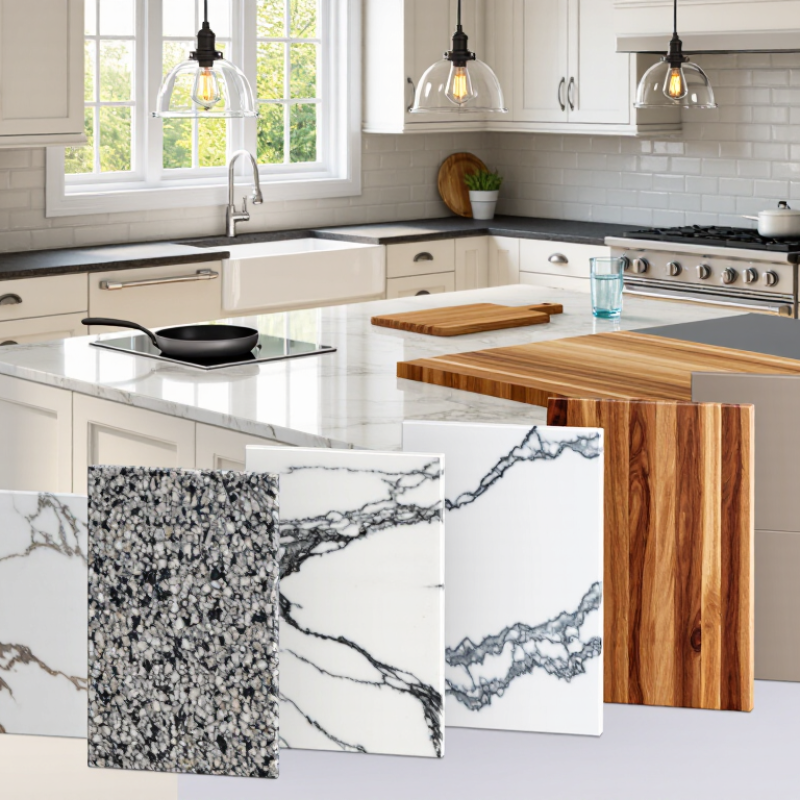
Countertop materials differ in composition, fabrication, and daily care. Granite and marble are quarried stone, cut into slabs, then polished or honed. Quartzite is also natural stone, but its hardness varies by slab. Engineered quartz combines mineral particles with resin and is made in controlled patterns. Porcelain begins as fired clay and is pressed into thin, dense slabs. Solid surface uses acrylic or polyester resins. Butcher block joins strips of wood. Each has trade-offs.
Fabrication affects edges, seams, and installation needs. Natural stone slabs vary in color and may need sealing; inspect the actual slab before choosing. Engineered quartz offers consistent patterns, though prolonged heat can damage its resin. Porcelain resists many stains and scratches, but thin edges can chip. Solid surface can have nearly seamless joints and is repairable, yet it scratches more readily. Wood feels warm and can be sanded, but needs routine oiling. I would not call any surface carefree. A beautiful sample can still feel wrong in a busy kitchen.
Tips: Ask how seams will look and what maintenance is required. Check a full-size sample beside your cabinets. Measure twice. Small details matter.
Relative resistance ratings for common countertop materials. Higher scores indicate better resistance; ratings are broad comparisons, not standardized test results. Actual performance varies with finish, installation, maintenance, and product quality.
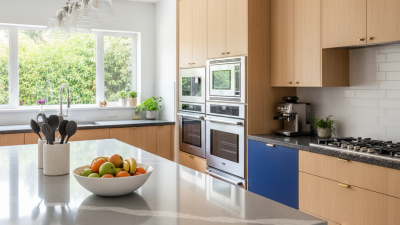
Houzz’s 2024 U.S. Kitchen Trends Study found quartz on 42% of renovated kitchen countertops, compared with granite at 21%. That is a substantial lead, but it describes surveyed renovation choices, not every household’s needs. Quartz’s consistent patterns can make matching samples easier, and its nonporous surface generally needs no sealing. Still, it is not indestructible: prolonged heat can damage some engineered surfaces. That matters.
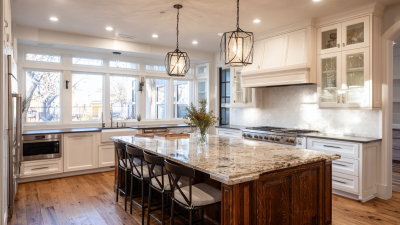
Granite offers natural variation, so a sample may look different from the full slab. It can need periodic sealing, depending on the stone and finish. Both materials can serve busy kitchens, but daily habits matter: a cook who sets hot pans straight onto counters may need different care than someone who mostly prepares cold meals. The survey shows preference, not performance under every kitchen’s conditions.
Tips: Ask your fabricator how the exact slab handles heat, stains, and routine cleaners. Take a sample home and view it beside your cabinets in morning and evening light. I would not choose from a small showroom chip alone; it can hide veining and color shifts.
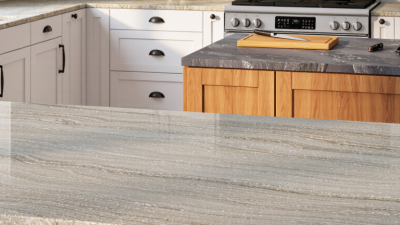
Quartzite is a natural stone that generally resists scratches and heat better than marble. Still, its pores may absorb oils or wine, so sealing and prompt cleanup matter. Sealer slows staining; it does not make the surface stain-proof. Use a trivet, especially near seams, where sudden temperature changes can be risky.
Marble’s veining gives each slab a distinct look, but its calcium-rich surface reacts with acidic foods. Lemon juice or vinegar can leave dull marks, even on a freshly sealed counter. Acid is the catch. Wipe spills quickly, and expect some scratches or etching to develop with use. Solid surface is nonporous, so routine cleaning is simple and liquids are less likely to penetrate. Small scratches can often be sanded out. Heat remains a weakness. A hot pan may discolor or deform the material, and deep damage is harder to disguise. Consider how you cook, not just how each surface looks in a sample. A small chip or stain on a sample can also reveal more than a glossy showroom display.
| Material | What It Is | Routine Care | Sealing | Heat Resistance | Scratch and Impact Resistance | Stain and Etch Resistance | Best-Known Trade-Off |
|---|---|---|---|---|---|---|---|
| Quartzite | Natural stone formed from quartz-rich sandstone under heat and pressure. | Wipe with a soft cloth and mild, pH-neutral cleaner; clean spills promptly. | Usually benefits from a penetrating sealer. The need and frequency depend on the specific stone and sealer; follow the fabricator’s guidance. | Generally handles heat well, but sudden temperature changes can damage stone or affect the installation. Use trivets. | Hard and generally scratch-resistant, though edges and slabs can chip or crack from impact. | Often less porous than marble, but porosity varies. Some slabs can absorb liquids; acidic products are typically less likely to etch quartzite than marble, but test the specific slab. | Natural patterns vary from slab to slab, and the name “quartzite” is sometimes misapplied in the market; confirm the stone before purchase. |
| Marble | Natural metamorphic stone composed mainly of calcite or dolomite. | Use a soft cloth and pH-neutral stone cleaner. Wipe acidic spills such as lemon juice or vinegar quickly. | Often sealed to slow liquid absorption, but sealer does not prevent acid etching or make marble stain-proof. | Can tolerate brief contact with warm cookware better than many resin-based surfaces, but use trivets to avoid thermal shock and marks. | Softer than granite and quartzite; it can scratch, chip, or develop a worn patina with use. | Prone to etching from acids and may stain if liquids penetrate the stone. | Distinctive natural veining, but it requires care and will show wear more readily than many harder countertop options. |
| Solid Surface | Manufactured surface made primarily from acrylic or polyester resins with mineral fillers. | Clean with soap and water or a cleaner approved for the surface; many minor marks can be buffed or repaired. | Does not generally require sealing because the material is nonporous. | Less tolerant of high heat than natural stone; hot pans can discolor or damage it. Use trivets. | Can scratch more easily than stone, but many superficial scratches can be repaired by sanding or refinishing. | Nonporous and generally resistant to everyday stains; strong chemicals and prolonged exposure to some substances may still damage the finish. | Seamless-looking joints and repairability are advantages; heat protection and scratch care are important. |
| Engineered Quartz | Manufactured surface made from mineral particles, commonly quartz, bound with resin and pigments. | Clean with mild soap and water or a manufacturer-approved cleaner; avoid harsh chemicals that may affect the resin. | Does not generally require sealing because the surface is nonporous. | Resin can be damaged by high heat or sudden temperature changes. Use trivets rather than placing hot cookware directly on the surface. | Generally resists everyday scratches, but it is not scratch-proof; edges may chip from a hard impact. | Generally resists common household stains, though prolonged exposure to some chemicals or heat can discolor the resin. | Offers consistent patterns and low routine maintenance, but it is less suitable for direct contact with hot cookware. |
| Granite | Natural igneous stone with mineral composition and porosity that vary by slab. | Wipe with a soft cloth and pH-neutral cleaner; avoid abrasive or acidic products unless approved for the stone. | Some slabs benefit from sealing; others may need little or no sealer. Test and follow professional recommendations. | Generally has good heat resistance, but trivets help prevent thermal shock, surface marks, and damage to seams or nearby materials. | Hard and generally resistant to everyday scratching, but it can chip or crack if struck, especially at edges. | Resistance varies with porosity and finish. Sealer can slow absorption but does not make the surface stain-proof. | A durable natural-stone option, with care requirements and appearance varying from slab to slab. |
| Butcher Block | Wood countertop made from strips or blocks of hardwood joined together. | Wipe up water promptly and clean with mild soap. Cutting directly on it can leave knife marks and requires careful hygiene. | Food-safe oil or another suitable finish needs periodic renewal; maintenance depends on the finish and use. | Can scorch or discolor from hot cookware. Use trivets and protect the surface from prolonged heat. | Prone to cuts, dents, and scratches; some damage can be sanded and refinished. | Unsealed or worn finishes can absorb moisture and stains. Standing water may contribute to swelling or damage. | Warm, repairable appearance, but it needs more ongoing moisture and finish care than many stone surfaces. |
| Porcelain Slab | High-fired ceramic surface made from refined mineral materials. | Usually needs only a soft cloth and mild cleaner; avoid harsh tools that could damage the finish or edges. | Generally does not require sealing because the fired surface is nonporous. | Generally tolerates heat well, though sudden temperature changes and the countertop’s construction can affect performance. | Highly resistant to everyday scratching, but thin slabs and edges can chip or crack from impact. | Generally highly resistant to stains and household chemicals; suitability depends on the specific product and finish. | Low-absorption performance and varied designs are advantages; fabrication and edge protection are important. |
Performance varies by slab, finish, fabrication, installation, and care. Follow the countertop supplier’s instructions, and use cutting boards and trivets to help protect any surface.
Laminate and butcher block solve different budget problems. HomeGuide’s countertop cost guide places installed laminate at roughly $20–$50 per square foot, compared with about $50–$150 for butcher block. Treat these as planning ranges, not quotes: edge profiles, cutouts, and local labor can move the final bill. Laminate’s low upfront cost suits busy kitchens, but a chipped edge or deep burn is difficult to disguise. Small scratches may be less visible on patterned surfaces.
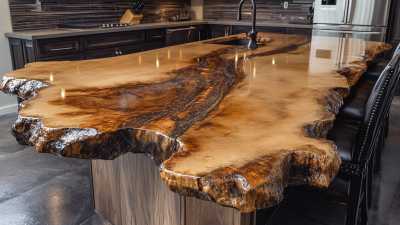
Butcher block can be sanded when knife marks accumulate. That is useful. It also needs regular oiling, and water left near a sink can darken or swell the wood. The USDA Forest Products Laboratory’s Wood Handbook documents how wood changes dimension as its moisture content shifts. In daily use, wipe spills promptly and keep a cutting board nearby; the countertop itself is not an ideal chopping surface. Honestly, upkeep is easy to underestimate. I’d compare not just installation prices, but also the time and materials needed for maintenance over several years.
A tight budget can still produce a useful, attractive counter. Laminate is usually the least costly choice, with many colors and patterns, but hot pans can damage its surface. Tile can be repaired piece by piece; grout, however, needs regular cleaning. Butcher block adds warmth and can be sanded after scratches, though standing water may stain it. Spills happen.
Granite handles heat well and gives each kitchen a distinct pattern, but sealing may be needed. Engineered quartz offers consistent color and simple daily care, though it is not a surface for hot cookware. Marble brings delicate veining, but acids such as lemon juice can etch it. Concrete allows custom shapes and colors; it can also crack. That trade-off is easy to overlook.
The Houzz 2024 U.S. Kitchen Trends Study identifies engineered quartz as the leading countertop choice among renovating homeowners. Popularity is not the same as suitability. Compare installed quotes, including edge work, sink cutouts, and delivery, rather than judging by a sample price alone. In a busy kitchen, a dark, glossy surface may show crumbs more clearly than expected. I would not pretend one material suits every household. Consider who cooks, how often, and how much upkeep feels realistic.