10 Tips for Buying Exterior Kitchen Cabinets
Buying Exterior Kitchen Cabinets is not simply a style decision. It is a durability decision made under sun, rain, heat, grease, and changing temperatures. A cabinet that looks beautiful in a showroom may swell, fade, or corrode outdoors. That uncomfortable possibility deserves attention.
Outdoor kitchen designer Daniel Germani has emphasized, “An outdoor kitchen must be designed as part of the architecture, not added as an afterthought.” His point is practical. Cabinet dimensions should fit the grill, sink, refrigerator, plumbing, and walking space before installation begins. Measure twice. Then measure again.
This guide, “10 Tips for Buying Exterior Kitchen Cabinets,” explores the details many homeowners overlook. We will examine cabinet materials, stainless-steel grades, powder-coated finishes, weather resistance, hardware, ventilation, storage, and warranty coverage. Small choices matter. A poorly sealed edge can invite moisture. A weak hinge can sag after repeated use. Dark finishes may also become painfully hot in direct afternoon sun.
Experience teaches another lesson: the cheapest option is rarely the lowest-cost option over time. Still, premium pricing does not guarantee quality. Ask for material samples. Inspect seams, welds, drawer movement, and finish consistency. Request written performance information, not vague promises.
Your climate matters, too. Coastal air, winter freezing, and intense ultraviolet exposure create different risks. Even careful buyers can miss one. That is why this introduction begins with a realistic question: will these cabinets remain dependable after years of outdoor cooking, cleaning, and weather? The answer should guide every purchase.
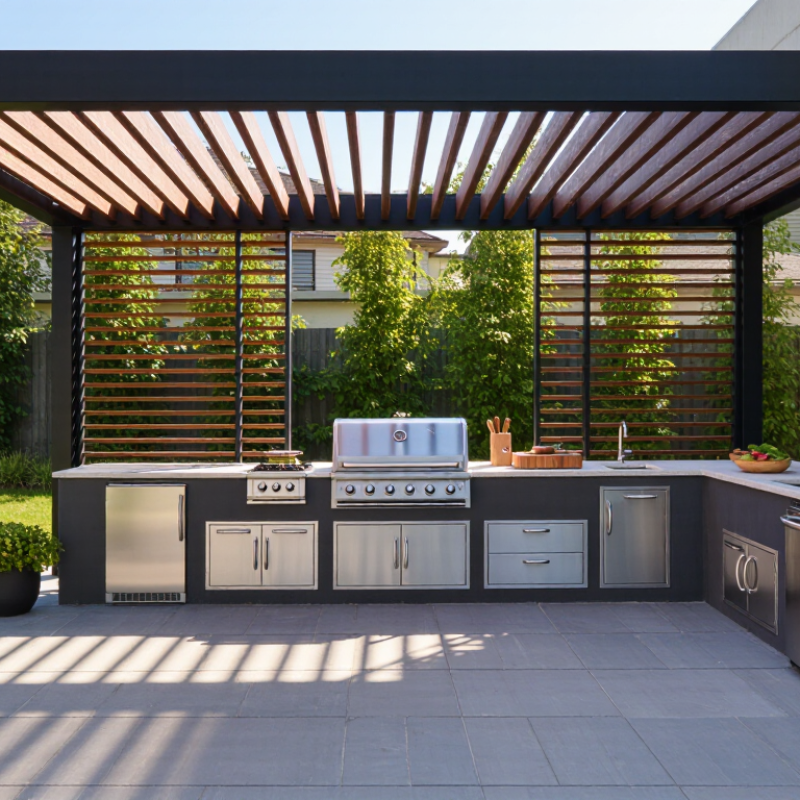
Define Climate Exposure, Drainage, and Wind Loads Before Choosing Cabinets
Buying Exterior Kitchen Cabinets Starts With the Site
Outdoor cabinets face more than sunlight. They endure rain, humidity, salt air, dust, and sudden temperature changes. I once underestimated a covered patio’s wind exposure. The cabinets stayed dry, but strong gusts pushed water beneath the countertop.
Measure the site during bad weather, not only on a clear afternoon. Note the roof overhang, wall protection, and the direction of driving rain. Check whether nearby sprinklers spray the cabinet doors. Climate exposure determines suitable panel construction, fasteners, seals, and finishes. Coastal locations need stronger corrosion resistance. Cold regions require materials that tolerate freezing and thawing.
Drainage deserves equal attention. Water should move away from cabinet bases, walls, and electrical connections. Use a level installation surface with deliberate drainage paths. Avoid placing cabinets directly on wet concrete or soil. Small errors matter. A blocked toe-kick can trap water after one storm. That detail is easy to miss.
Wind loads also affect cabinet safety. Freestanding units may need anchoring to structural supports, especially on raised decks or open patios. Do not rely on cabinet weight alone. Confirm local requirements for anchoring, countertop overhangs, and outdoor electrical equipment. A qualified installer can assess uplift forces and connection points. I prefer written measurements and photographs before ordering. Still, predictions can be imperfect. Recheck the site after installation, particularly following heavy rain or high winds.
Wind Pressure Rises Quickly With Outdoor Cabinet Exposure
The chart uses the standard dynamic-pressure relationship q = 0.613V², where V is wind speed in meters per second and q is pressure in pascals at standard sea-level air density. Because pressure increases with the square of wind speed, exposed cabinets need more careful anchoring and structural review as wind conditions rise.
Before choosing cabinets, document the local design wind speed, expected UV exposure, and drainage conditions. A finished surface with a 2% fall drains approximately 20 mm for every meter, but the required slope and drainage details depend on the supporting deck, local rainfall, and building code. Final cabinet connections and wind resistance should be checked against the requirements of the project location.
Verify UV Protection Through AAMA 2605 Coating Performance Requirements
When buying exterior kitchen cabinets, verify UV protection through documented coating performance, not a sales phrase. AAMA 2605-22 is a demanding benchmark for high-performance organic coatings. It uses extended outdoor exposure in South Florida, where intense sunlight, humidity, and salt air accelerate fading. The specification limits color change to 5 Delta E units after ten years. It also requires a chalk rating of 8 or better, using the ASTM D4214 scale.
Ask for the complete test report. It should identify the coating system, substrate, application method, test location, and exposure period. A certificate without these details is weak evidence. Check whether the report covers the exact cabinet finish, not a different metal panel or color.
Dark finishes deserve extra attention. They absorb more heat and can show fading sooner. Do not guess.
Inspect a sample outdoors before ordering. Place it in direct afternoon sun, especially near a south-facing wall. Look for uneven gloss, powdery residue, edge swelling, and color shifts around routed details. ASTM D2244 provides the standard method for measuring color differences, but visual inspection still catches practical defects. AAMA 2605 testing is valuable, yet it is not a lifetime warranty. Local shade, cleaning chemicals, standing water, and poor installation can change results. I would also request maintenance instructions in writing. Small omissions matter.
Match 34.5-Inch Base Heights and 24–25-Inch Depths to Outdoor Work Zones
Outdoor kitchen cabinets should fit the work, not simply fill the patio. A 34.5-inch base height usually matches standard indoor cabinetry. With a countertop added, the finished surface often reaches about 36 inches. That height suits chopping, plating, and sink tasks for many users. Measure twice. Personal comfort still matters.
Use 24- to 25-inch cabinet depths for practical outdoor work zones. A shallow prep cabinet keeps movement easier behind a counter. Deeper units can support grills, sinks, or larger storage bins. Check the appliance cutout before ordering. Doors, handles, and trim may extend beyond the cabinet box. Leave breathing room around hot equipment. Include space for safe access and maintenance.
Outdoor conditions demand more than attractive dimensions. Confirm that cabinet materials resist moisture, sunlight, and temperature changes. Raise the units slightly if water may collect on the paving. A level base prevents doors from drifting open. Secure cabinets against strong wind, especially on exposed decks. Plan drainage near sinks and ice storage. Keep electrical and gas work compliant with local requirements. In real installations, small measurement errors cause expensive adjustments. I would recheck corners, wall gaps, and countertop overhangs before final placement. A perfect plan can still need revision onsite.
Specify 304 or 316 Stainless-Steel Hardware for Corrosion-Prone Locations
10 Tips for Buying Exterior Kitchen Cabinets
Outdoor cabinets face rain, salt spray, grease, and repeated temperature changes. Hardware often fails before the cabinet panels do. The NACE IMPACT study estimated global corrosion costs at about $2.5 trillion annually, or 3.4% of global GDP. That figure makes small material choices worth serious attention.
Tip: Specify 304 stainless-steel hardware for sheltered patios with limited salt exposure. It suits many outdoor kitchens and resists ordinary moisture well. Choose 316 stainless steel near beaches, pools, docks, or roads treated with deicing salt. Its molybdenum content improves resistance to chloride-driven pitting. It is not corrosion-proof. Careless installation can still create rust stains.
Tip: Ask for the steel grade in writing. “Stainless” alone is too vague. Check hinges, screws, drawer slides, latches, and mounting brackets, not only visible handles. The same NACE study emphasizes prevention and planned maintenance as major ways to reduce corrosion losses. A cheaper fastener can quietly damage an otherwise durable cabinet.
Leave room for drainage. Use sloped surfaces and avoid trapping wet leaves around hinges. Rinse coastal hardware with fresh water, then dry it with a soft cloth. Harsh chlorine cleaners may worsen surface damage. I would also inspect hidden screw heads twice yearly. That step is easy to forget, and experience shows hidden corrosion spreads unnoticed. When specifications conflict, request a written corrosion recommendation for the exact site.