Blog

Top 10 Interactive Light Sculpture Suppliers for Buyers

Interactive Light Sculpture brings movement, color, and audience participation into public spaces, galleries, hotels, and commercial venues. For buyers, the appeal is immediate: a visitor approaches, a sensor responds, and a wall or floor shifts into a new pattern. The effect can feel effortless. The engineering behind it is not.

Choosing a supplier takes more than reviewing polished installation photos. Buyers should examine project experience, control systems, material quality, installation support, and maintenance plans. Ask how the sculpture performs under real conditions, including changing light, frequent interaction, and long operating hours. Details matter. A responsive demonstration is useful, but it does not prove long-term reliability. Request clear specifications, reference projects, and realistic guidance on lead times and service needs.

This guide presents ten Interactive Light Sculpture suppliers for buyers comparing creative capability and practical delivery. Each company may suit a different brief, from a compact indoor feature to a large, site-specific installation. Compare what is actually included: concept development, fabrication, software, commissioning, and after-sales support can vary considerably. No supplier list can remove every uncertainty. Even experienced teams can underestimate maintenance or audience behavior, so buyers should challenge assumptions early and leave room for testing. A beautiful render is only a starting point. The right partner can explain how the finished work will be built, operated, and cared for after opening day.

Top 10 Interactive Light Sculpture Suppliers for Buyers

What Defines an Interactive Light Sculpture and Its Main Applications

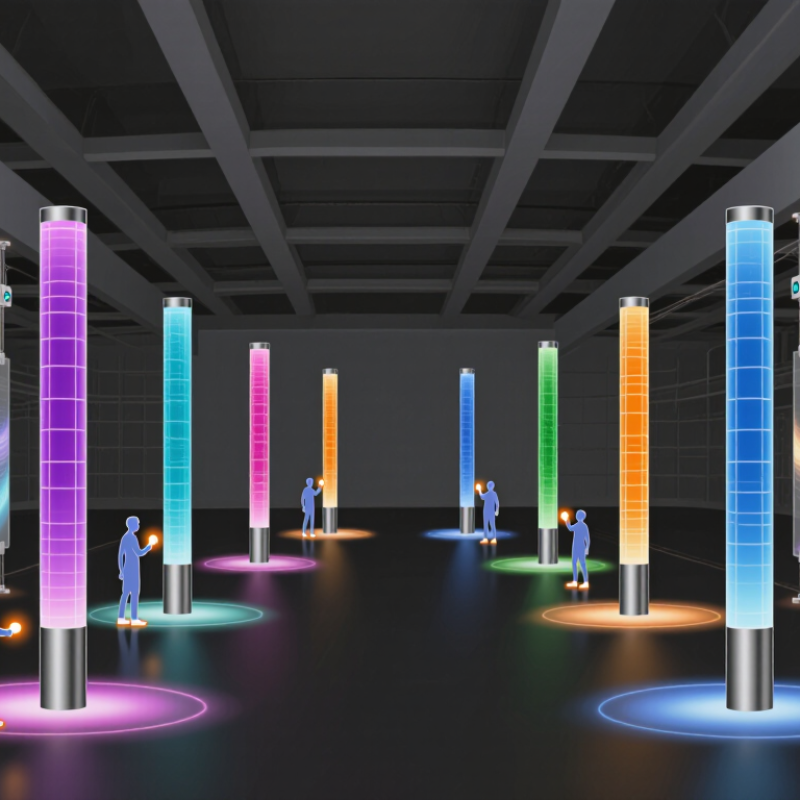
An interactive light sculpture combines a physical structure, programmable illumination, and a way for people or surroundings to influence its behavior. Sensors may detect a visitor’s movement, distance, touch, or sound, then change color, brightness, or pattern. The result is a visible response, not simply a lamp with changing colors. For buyers, useful details include sensor range, response time, viewing distance, and how the piece behaves in bright daylight.

Applications range from museum exhibits and public plazas to hotel lobbies, event spaces, and building façades. In a gallery, a visitor’s approach might trigger a gentle ripple across translucent panels. Outdoors, the same effect needs weather-resistant materials, controlled brightness, and reliable operation. Context matters. An effect that feels inviting indoors may become distracting in a busy walkway.

Energy use also deserves attention. The International Energy Agency reports that lighting accounts for about 15% of global electricity consumption. The U.S. Department of Energy says LEDs use at least 75% less energy than incandescent lighting. These figures describe lighting broadly, not interactive sculptures specifically. Still, they support asking suppliers for power estimates and maintenance plans. Interactivity can also become a gimmick if visitors cannot tell what their actions change. That is worth testing with real users before installation.

How to Evaluate Suppliers for Design, Technology, and Reliability

Interactive light sculpture is artwork and an installed system. A polished rendering proves little. Ask for a full-scale mock-up, not just a screen preview. Check how colors shift across viewing angles, whether sensors miss slow movement, and how the piece behaves in bright daylight. Request wiring diagrams, control-protocol details, photometric data, and documented tests. A small demo can expose flicker or awkward transitions before fabrication.

Reliability needs evidence, not reassuring adjectives. The U.S. Department of Energy’s Energy Saver guidance says LEDs use at least 75% less energy and can last up to 25 times longer than incandescent lighting. Treat that as a broad technology comparison, not a sculpture’s guaranteed service life. Ask suppliers for measured power draw, thermal test results, maintenance access, replacement-module availability, and warranty exclusions.

Can a technician swap one light module without dismantling the whole frame? That matters. Compare bids against the same operating hours and environmental conditions; otherwise, lifetime claims are difficult to judge. I would also request references for installations with similar scale and exposure. References help, but they are not proof that every project went smoothly.

Profiles of Ten Interactive Light Sculpture Suppliers

The ten supplier profiles compare capabilities that matter beyond a striking render: custom fabrication, sensor integration, control systems, outdoor durability, installation support, and maintenance. Some suppliers specialize in lightweight indoor forms, while others build weather-resistant structures with sealed enclosures and replaceable components. Look closely at how each team handles a moving visitor, changing daylight, or a failed sensor. A tiny delay can make an installation feel unresponsive.

Energy use is another practical measure. The U.S. Department of Energy reports that LEDs use at least 75% less energy and last up to 25 times longer than incandescent lighting. Those figures are a useful benchmark, not a guarantee for a complete sculpture; sensors, processors, and cooling also draw power. Ask suppliers for measured system consumption, material samples, control-system documentation, and a prototype test. A polished demo can still hide awkward servicing. That deserves scrutiny.

Tips: Request a short video of the sculpture responding to real visitors, plus a written maintenance plan. Confirm who replaces a damaged diffuser or recalibrates sensors. Compare warranties carefully; the weakest detail may matter most.

Top 10 Interactive Light Sculpture Suppliers

Number of supplier profiles covered in this overview

This chart reflects the article’s stated scope: ten supplier profiles. It does not rank suppliers or compare company-specific data.

Comparing Supplier Capabilities, Customization, and Project Support

Choosing among the top interactive light sculpture suppliers requires more than reviewing polished renderings. Ask for a control-system diagram, sample lighting effects, and a clear account of who handles programming on site. Can the supplier test motion sensors under changing daylight? Can technicians replace a single module without dismantling the sculpture? Small details matter. The U.S. Department of Energy’s Energy Saver guidance says LEDs use at least 75% less energy and last up to 25 times longer than incandescent lighting. That makes fixture efficiency, thermal management, and access for maintenance practical comparison points, not decorative extras.

Customization should be tested against the actual space. Request a full-scale mock-up of one joint, diffuser, or interactive zone before approving production. Check how color shifts across materials, and whether sensor response feels natural from different approach angles. The Illuminating Engineering Society’s recommended practices can help teams assess visual comfort and lighting quality. Still, no guideline can fully predict how visitors will behave in a specific lobby or plaza. That part needs a site trial.

Project support is equally revealing. Compare commissioning plans, spare-part availability, software documentation, and response times after installation. Ask for a schedule that includes wiring, structural coordination, testing, and operator training. Good proposals name the responsible party for each task. Vague answers are a warning. One uncomfortable truth: even a capable supplier may underestimate integration work. Build in time for revisions, and record what the first prototype gets wrong.

How Buyers Can Plan Procurement, Installation, and Maintenance

Buyers should define the sculpture’s footprint, viewing distance, control system, and operating hours before comparing suppliers. Request a lighting schedule, electrical load, mounting details, and replacement-part list with each proposal. The IEA’s 2023 Global Status Report for Buildings and Construction estimates that building operations consume 30% of global final energy. That makes power use worth checking, even when the sculpture is only one feature in a larger space. Ask for measured consumption at typical brightness, not just maximum output. Allow budget for a site survey, lifting equipment, commissioning, and spare components. A low purchase price can hide difficult access costs.

Installation planning should account for ceiling structure, nearby walkways, glare, and maintenance access. Confirm who provides structural calculations and who tests controls after installation. Record cable routes and control settings; these details save time when a fault appears months later. For maintenance, agree on cleaning methods, inspection intervals, response times, and the expected service life of light sources. Keep a dated log of failures and repairs. One assumption deserves a second look: “low maintenance” does not mean maintenance-free.

Tips: Before signing, request a small-scale lighting test in the intended room. Check reflections on glass, shadows on floors, and visibility from seated eye level. Test before opening. Keep one spare control unit and a labeled wiring diagram on site.

Top 10 Interactive Light Sculpture Suppliers for Buyers - How Buyers Can Plan Procurement, Installation, and Maintenance

This buyer’s guide compares ten common supplier types rather than named companies or brands. Project scope, lead time, installation requirements, and maintenance needs vary by location, design complexity, approvals, and component availability. Treat timing as an early planning guide and confirm details in supplier quotations.

Supplier Type Typical Offering Interaction and Control Best-Fit Applications Buyer Checks Before Purchase Installation Planning Maintenance Planning
Custom public-art fabricator One-off sculptural structures combining a designed form, lighting, and project-specific fabrication. May use programmed light scenes, sensors, or visitor-triggered responses; confirm the control system and content handover. Civic plazas, cultural districts, campuses, and landmark public spaces. Review concept-to-engineering process, material samples, structural documentation, warranty scope, and responsibility for permits. Allow time for site surveys, foundation design, structural review, delivery access, and coordination with civil or electrical trades. Request an asset register, replacement-part list, cleaning guidance, and a plan for software and controller updates.
Interactive media-art studio Art direction and digital content integrated with lighting, projection, sensing, or custom-built objects. Can respond to movement, touch, sound, or other inputs; specify privacy, accessibility, and fallback behavior. Museums, galleries, visitor centers, and temporary exhibitions. Clarify content ownership, source-file delivery, sensor coverage, data handling, and who supports the software after launch. Coordinate sightlines, ambient light, projection surfaces, network access, power, and equipment cooling. Plan for sensor checks, content backups, software compatibility testing, and access to specialist technical support.
Architectural lighting integrator Lighting design and integration of luminaires, controls, wiring, and related infrastructure into a sculptural project. Often supports scheduled scenes, dimming, and centralized controls; interactive behavior depends on the selected system. Building exteriors, plazas, bridges, and permanent landscape installations. Check photometric design, glare control, ingress protection suitability, control-system compatibility, and commissioning scope. Confirm circuit capacity, cable routes, mounting details, safe access, and coordination with the electrical contractor. Ask about driver and luminaire serviceability, cleaning intervals, control backups, and availability of replacement components.
LED sculpture specialist Light-emitting sculptural forms using linear, point-source, or pixel-addressable LED components. May offer color-changing effects, animation, and programmed responses; verify whether effects are locally or remotely controlled. Event venues, commercial spaces, public art, and entertainment environments. Confirm color consistency, thermal management, outdoor rating where applicable, component access, and expected service life conditions. Check structural supports, power distribution, controller location, heat dissipation, and safe lifting requirements. Plan for inspection of connections, cleaning, firmware backups, and replacement of modules or power supplies.
Projection-mapping and immersive-display integrator Projectors, media servers, mapping software, and installation services for illuminated sculptural surfaces. Content can be timed, audience-responsive, or synchronized across multiple projectors, subject to system design. Large indoor venues, façades, event spaces, and sculptural surfaces with suitable projection conditions. Evaluate brightness for site conditions, resolution, throw distance, content-production responsibilities, and licensing terms. Provide accurate geometry, mounting positions, power and network access, environmental control, and a calibration window. Budget for projector cleaning or servicing, media-server backups, recalibration, and periodic content-system checks.
Sensor and interactive-technology integrator Sensor systems, control hardware, and software that enable a sculpture to react to visitors or environmental inputs. Possible inputs include motion, proximity, touch, sound, or approved environmental measurements. Interactive public spaces, learning environments, exhibitions, and participatory installations. Ask about detection range, false-trigger handling, accessibility, privacy safeguards, and operation if a sensor fails. Test sensor placement against sunlight, reflections, crowd flow, mounting height, and network or power availability. Schedule sensor cleaning and testing; retain configuration files and document reset and troubleshooting procedures.
Landscape and water-feature specialist Integrated lighting and sculptural elements designed for gardens, water features, or outdoor landscape settings. May combine timed scenes with motion or water-related controls; confirm the control logic and seasonal operating modes. Parks, gardens, resorts, courtyards, and waterfront public spaces. Verify suitability for moisture and site exposure, drainage details, electrical protection, and coordination with landscape plans. Coordinate foundations, drainage, irrigation, water systems, cable routes, and access for installation equipment. Include seasonal inspections, debris removal, water-system checks where relevant, and testing of electrical protection.
Modular event-installation supplier Reusable or temporary illuminated structures configured for a specific event, venue, or touring schedule. Typically supports pre-programmed effects and may include simple interactive controls or show synchronization. Festivals, brand-neutral public events, conferences, and temporary cultural programs. Confirm rental or purchase terms, load ratings, fire-safety documentation, setup scope, and responsibility for onsite operators. Plan around venue loading access, assembly sequence, rigging approval, power distribution, and event-specific deadlines. Agree on post-event inspection, repair responsibilities, safe packing, storage conditions, and replacement-part handling.
Public-realm engineering and fabrication contractor Engineered outdoor structures with integrated lighting, built to meet project-specific structural and site requirements. Interaction may be supplied by a separate controls or media partner; define interface responsibilities in the contract. Permanent installations in transport areas, plazas, parks, and other public environments. Review engineering deliverables, materials and finishes, corrosion strategy, safety documentation, and installation responsibility. Coordinate permits, utility surveys, foundations, traffic or pedestrian management, lifting plans, and inspection hold points. Set inspection intervals based on site exposure and engineering advice; document access, finish care, and repair procedures.
Turnkey design-build integrator A coordinated package covering design, fabrication, lighting, controls, installation, and commissioning through one project lead. Can combine lighting scenes and interactive inputs; confirm which subsystems are included and who maintains them. Projects where the buyer needs a single point of coordination across multiple technical disciplines. Request a responsibility matrix, itemized scope, exclusions, milestone schedule, commissioning criteria, and handover documents. Confirm site readiness, trade coordination, access requirements, testing windows, and the process for managing design changes. Agree on warranty contacts, response process, training, system documentation, software access, and long-term service options.