Top 10 Dynamic Compaction Equipment Manufacturers Worldwide
Dynamic compaction can turn loose, compressible ground into a stronger platform for construction. The work is visible: a heavy tamper rises, drops, and leaves a crater that crews inspect before the next pass. Yet choosing Dynamic Compaction Equipment involves more than comparing machine size or impact energy. Soil conditions, treatment depth, site access, and production targets all shape what equipment can do safely and effectively.
This guide introduces 10 manufacturers serving markets worldwide. It considers practical factors such as operating capacity, machine configuration, control systems, service support, and the availability of technical information. Manufacturer specifications can help with comparisons, but they do not prove how a machine will perform on every site. Ground conditions matter. So do operator experience and project planning. Buyers should verify current specifications, regional support, and application requirements directly with manufacturers or qualified engineers. That step is easy to overlook when a brochure presents clean numbers and confident claims. The companies featured here offer a starting point for research, not a substitute for a site-specific assessment. Some details may change by model or region, so careful verification remains worthwhile.
What Dynamic Compaction Equipment Is and How It Works
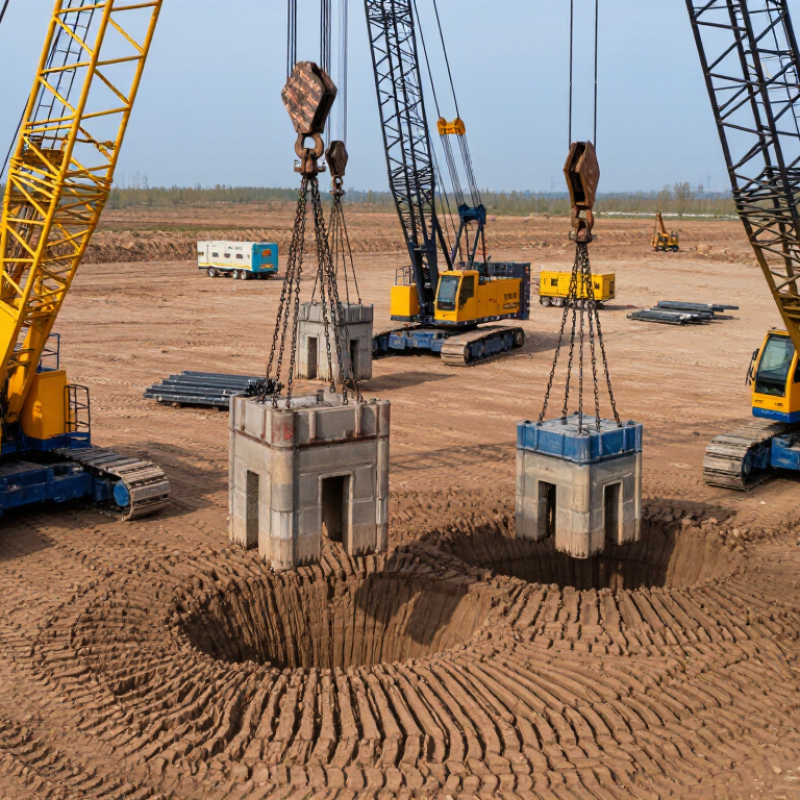
Dynamic compaction equipment densifies loose, compressible ground by repeatedly dropping a heavy steel weight, called a tamper, from a controlled height. A crawler crane or purpose-built rig lifts the tamper, then releases it onto marked points across the site. Each impact sends stress waves through the soil, rearranging particles and reducing large voids. The crew follows a planned grid, often making several passes with different spacing or drop energy. It is loud work. Dust rises, and the ground can visibly settle.
The method is commonly considered for granular fill, reclaimed land, and some heterogeneous deposits, but results depend on soil type, groundwater, layer thickness, and nearby structures. Operators adjust tamper mass, drop height, impact count, and point spacing to suit ground conditions. Field trials and measurements, such as settlement checks or probing, help confirm whether the target depth and improvement have been reached. Not every site responds evenly. Fine-grained or highly saturated soils may dissipate impact energy differently, so a simple pattern can mislead. Vibration and crater formation also need observation; practical judgment still matters. Even experienced teams can misread early results. That is worth remembering.
Dynamic Compaction Equipment: Representative Impact Energy
Dynamic compaction densifies loose ground by repeatedly dropping a heavy weight from height. The chart shows theoretical impact energy for illustrative drop settings, calculated as mass × gravity × drop height.
Drop masses of 10–40 tonnes and heights of 10–40 metres are representative of commonly used dynamic compaction ranges. Values are calculations, not manufacturer specifications or a ranking; actual equipment settings depend on the ground conditions and project design.
Key Technologies and Applications in Ground Improvement
Dynamic compaction improves weak ground by repeatedly dropping a heavy weight from a controlled height. Modern equipment uses adjustable lifting systems, impact monitoring, and positioning tools to help crews manage drop energy and spacing. The process can densify loose granular soils, reclaimed land, and some fill deposits. A typical work area is treated in a planned grid, with heavier drops often used before lighter finishing passes. The ground still needs testing; impact records alone do not prove uniform improvement.
Tips: Check groundwater depth, soil type, and nearby structures before setting the drop pattern. Track crater depth and surface heave after each pass. Small details matter. If vibration reaches a nearby building, pause and review the method rather than simply reducing the drop height.
Applications range from industrial yards and warehouse foundations to transport corridors and large development sites. Equipment selection depends on the required energy, working platform, access, and lifting capacity. Sensors can record drop height and impact count, while survey checks help identify uneven settlement. These tools improve process control, but they cannot replace field verification through suitable geotechnical testing. One limitation is easy to underestimate: results may vary across a site, especially where fill composition changes. A careful trial area can expose that inconsistency before full production begins.
Criteria for Evaluating Global Equipment Manufacturers
Top 10 Dynamic Compaction Equipment Manufacturers Worldwide
Criteria for Evaluating Global Equipment Manufacturers
A sound comparison starts with the ground, not the brochure. Dynamic compaction performance depends on soil type, water content, drop mass, height, and grid spacing. Request verified figures for impact energy, cycle time, crane capacity, and expected output per shift. Ask for trial records from comparable ground; success on dense gravel does not prove performance in soft fill. Field results matter.
The Global Infrastructure Hub’s Global Infrastructure Outlook (2017) estimated $94 trillion in infrastructure investment needs by 2040, against $79 trillion in projected investment—a $15 trillion gap.
This forecast signals demand, but it does not validate any machine. Check fatigue data, winch inspection intervals, emergency stops, operator visibility, and local parts availability. Compare lifecycle cost per treated area, not purchase price alone. ISO 12100 provides a machinery risk-assessment framework; ISO 9001 certification concerns quality management, not compaction performance. Important distinction.
No scorecard is perfect. Site trials and local support can reveal gaps that polished specifications miss.
Profiles of 10 Leading Dynamic Compaction Equipment Manufacturers
This feature examines ten leading dynamic compaction equipment manufacturers through their engineering strengths, rather than an unverified sales ranking. Their profiles cover crawler stability on soft access roads, high-capacity winches, controlled drop heights, modular counterweights, automated release systems, and operator visibility. Other distinguishing factors include transportable rig designs, accessible maintenance points, adaptable carriers, and application support. These details matter on site. A stable platform and predictable release can reduce delays when crews reposition between impact points.
The Federal Highway Administration’s 2017 Ground Modification Methods Reference Manual describes dynamic compaction using tamper weights of roughly 5–30 tonnes and drop heights of about 10–30 metres. Those ranges help explain why equipment capacity is only part of the comparison. Buyers also need to assess ground conditions, lift planning, working radius, and the sequence of impacts. A heavy tamper is not automatically the right choice.
The ten manufacturer profiles therefore compare practical capabilities: lifting-system design, energy consistency, setup time, transport requirements, and serviceability. A profile may excel at high-energy work but demand more room for assembly. Another may offer simpler transport, yet provide fewer configuration options. Specifications deserve scrutiny. The FHWA manual is a technical reference, not a product ranking, so performance claims still need project-specific verification and field evidence.
How to Compare Manufacturers by Equipment, Support, and Market Reach
Comparing dynamic compaction manufacturers means looking beyond rated impact energy. Check rammer mass, drop height, crane capacity, cycle time, and how clearly the supplier documents operating limits. Ask for a sample compaction plan showing grid spacing, pass sequence, and monitoring records. The FHWA’s Ground Improvement Methods Reference Manual treats dynamic compaction as a site-dependent technique, so request project references with similar soil conditions—not just a machine brochure. Specifications matter. So does field evidence.
Support can decide whether equipment stays productive after delivery. Compare technician coverage, spare-parts availability, operator training, commissioning, and realistic response times in your region. Global reach is useful only when local service is practical.
The Global Infrastructure Hub’s 2017 Global Infrastructure Outlook estimated $94 trillion in infrastructure investment needs through 2040, with a potential $15 trillion funding gap. That signals a large infrastructure pipeline, not guaranteed demand for any one compaction method.
Ask manufacturers how they support remote sites and provide parts during peak work. A wide sales network can look impressive, but it may not mean fast repairs. I would treat published uptime claims cautiously unless they include clear measurement periods and customer references.