10 Tips for Choosing Metal Railings
Choosing Metal Railings is not just a matter of matching a finish to your home. The right choice should feel secure under a steady hand, suit the building, and hold up to the weather it faces. A balcony overlooking the coast has different demands from an indoor stairway, where fingerprints and sharp corners may matter more. Small details matter.
Before comparing styles, look closely at where the railing will go and how people will use it. Measure the opening, note nearby walls and steps, and consider who needs to grip the rail. Then compare metals, coatings, post spacing, and maintenance needs. A glossy sample may look excellent in a showroom, yet show scratches or salt marks outdoors. That is easy to overlook.
This guide’s 10 tips for choosing Metal Railings will help you ask practical questions before you buy. Check how parts connect, whether the finish can be repaired, and what care the manufacturer recommends. Ask suppliers for product specifications, warranty terms, and installation guidance in writing. If a detail is unclear, pause and verify it rather than relying on a quick sales answer. Local building requirements also deserve attention, so confirm them with the relevant authority or a qualified installer. No single railing suits every property. A low-maintenance option may cost more upfront, and a striking design may need extra cleaning. Weigh the trade-offs honestly. The best choice is the one that fits your space, your budget, and the people who use it every day.
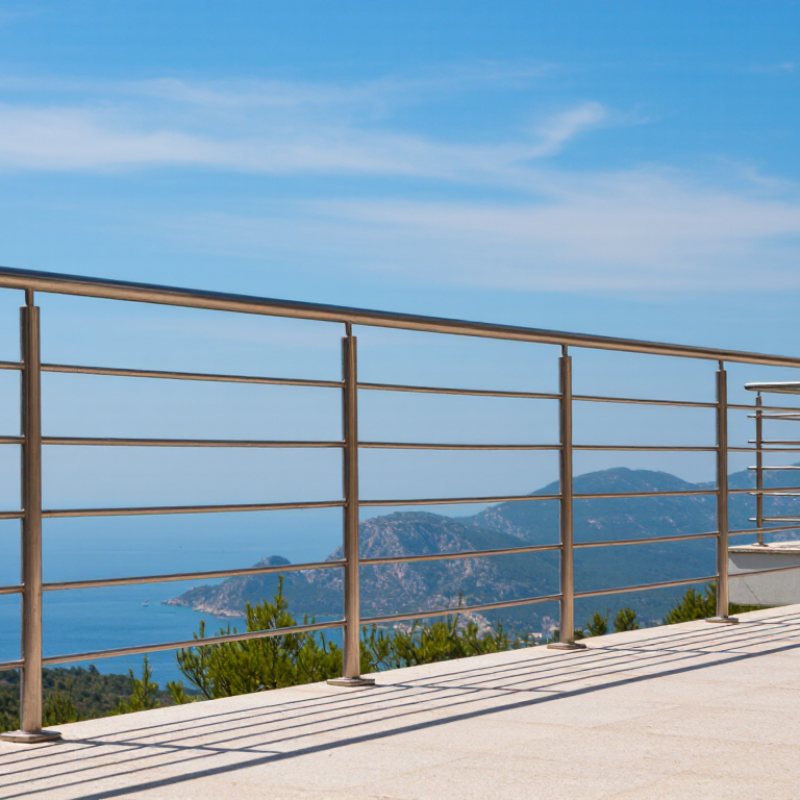
Define the Railing’s Purpose, Location, and Use
Define the railing’s job before comparing finishes. Is it meant to prevent a fall at an elevated deck, guide people on stairs, or steady someone along a porch? A handrail supports a grasp; a guardrail creates a barrier. One may not replace the other. The location matters, too: a damp poolside path, exposed balcony, and indoor stairway face different conditions. AARP’s 2024 Home and Community Preferences Survey found that 75% of adults aged 50 and older want to remain in their homes as long as possible. That makes future users worth considering, not just today’s household. A railing that looks elegant but is difficult to grip may miss the point.
Think about who will use it, and how. CDC data indicate that more than one in four adults aged 65 and older report falling each year. This does not mean every railing prevents falls, but it supports careful planning around stairs, landings, and frequently used routes. Note whether children, older adults, or visitors use the space; check for wet shoes, low light, and narrow turns. Small details matter. On a coastal deck, ask about corrosion resistance; near a doorway, leave enough room for comfortable passage. Confirm required heights, spacing, and load performance against local building rules and a qualified installer’s guidance. I would not choose by appearance alone. It is easy to underestimate how a thick top rail feels in the hand until daily use begins.
Compare Metal Types, Finishes, and Weather Resistance
Steel railings offer strength and a firm feel, but untreated steel can rust when moisture reaches exposed edges. Galvanized steel adds a protective zinc layer, while stainless steel can suit damp settings; its performance still depends on grade and upkeep. Aluminum is lighter and naturally resists rust, though it may feel less substantial under heavy use. Match the metal to the site, not just the sample.
Finishes affect both appearance and maintenance. Powder coating creates a colored, even surface, but chips can expose metal beneath. Paint is easier to refresh, yet may need more frequent attention. Look closely at corners, welds, and fastener holes, where coatings can be thin. A finish sample can look convincing indoors. Sunlight tells another story.
Weather matters. Near the coast, salt carried by wind can speed corrosion, so choose suitable alloys and protective finishes, then rinse surfaces periodically. In cold, wet areas, check that water can drain instead of collecting around posts. Small details matter. Ask how scratches should be repaired and inspect the railing after storms. I would not assume any finish is maintenance-free; even durable materials can disappoint when water sits in joints or hardware is neglected.
10 Tips for Choosing Metal Railings: Compare Metal Types, Finishes, and Weather Resistance
This chart compares the typical density of common railing metals. Density affects railing weight, but weather resistance depends more on the metal grade, finish, maintenance, and local exposure.
Aluminum is much lighter than steel or iron. For outdoor use, aluminum naturally forms a protective oxide layer; carbon steel and wrought iron generally need a durable coating; and stainless steel’s corrosion resistance varies by grade and environment. Coastal salt exposure can increase corrosion risk for all railing systems.
Check Safety Requirements, Building Codes, and Accessibility
Metal railings should be checked against local building codes before you compare finishes or prices. Requirements can vary by location, building type, and whether the railing protects a stair, balcony, or accessible route. Ask the local building department or a qualified design professional which rules apply. Do not guess. A railing that looks sturdy may still have unsafe openings, an unsuitable height, or weak connections.
Measure the planned route and note where people turn, climb, or transfer from a mobility aid. Check that handrails are easy to grasp and continuous where required, and that posts do not narrow the clear passage. On stairs, small details matter: a bulky bracket or sharp edge can catch clothing or interrupt a secure grip. Confirm permitted heights, opening limits, extensions, and load requirements for your project; there is no single measurement that suits every code. Keep the approved drawings and product specifications together, then compare them with the finished installation. I would not treat a quick visual check as proof of compliance. Even a careful plan can miss a detail, so request an inspection when required and correct issues before the railing is used.
Match the Railing Design to the Building and Surroundings
Metal railings look right when their lines belong to the building, not just the product catalogue. On a brick warehouse, simple, square-section bars can echo the façade’s strong grid. A timber porch may suit slimmer uprights and a warmer, less industrial finish. For a modern glass entrance, quiet horizontal lines can preserve the view. Check proportions from the street and from inside the building. A railing that looks delicate on paper may feel bulky beside a narrow stair. Small details matter. Match the finish to nearby window frames, door hardware, and paving, while letting the railing remain clearly visible at dusk.
Exposure should shape the design, too. Salt air, road spray, and damp planting beds can shorten a finish’s service life. The American Galvanizers Association’s corrosion guidance reports that zinc corrodes at roughly one-thirtieth the rate of steel in comparable atmospheric conditions; actual performance varies with exposure. That makes galvanizing worth considering where maintenance access is difficult. For structural planning, the 2021 International Building Code specifies a 50-pound-per-linear-foot uniform load for many guards, alongside concentrated-load criteria. Confirm the requirements for the building type and location. I would mock up one panel before ordering; drawings can flatter a pattern. A sample beside the actual brick or stone often reveals an awkward contrast that a screen misses.
Measure the Space and Compare Installation and Lifetime Costs
Measure the clear span between finished posts, then note corners, stair angles, and mounting surfaces. A wall-mounted rail and a post-mounted rail can need different hardware and labor. Record the finished floor height too; a small measuring error can leave an awkward gap or force a costly adjustment. Ask installers to price the same measured layout, including removal, anchors, site preparation, and finishing. Small details matter.
Compare installed prices with likely upkeep, not material prices alone. The U.S. Bureau of Labor Statistics reported that private-industry compensation costs rose 3.8% over the 12 months ending December 2024. That national figure is not a railing estimate, but it shows why labor assumptions and quote dates deserve attention. For durability, the American Galvanizers Association’s service-life charts show how zinc-coating thickness and exposure conditions affect time to first maintenance. Salt spray, moisture, and cut edges can change the picture. Ask what finish is specified and how exposed cuts will be protected. Then compare expected cleaning, repainting, and component replacement over your ownership period. A cheaper quote may still win. I would not assume it will.