
Blog

7 Tips for Buying Military Jungle Boots

Military Jungle Boots must handle heat, water, mud, and long hours on uneven ground. A boot that feels comfortable in a store may rub badly after several wet miles. Small details matter: drainage, drying time, sole grip, ankle support, and the fit of the toe box. The right choice depends on terrain, climate, load, and the wearer’s feet.

This guide introduces seven practical checks for comparing Military Jungle Boots. It focuses on materials, construction, traction, drainage, fit, durability, and care. Standards such as ASTM F2913 assess footwear slip resistance, while ISO 20344 outlines footwear testing methods. These references can inform a careful comparison, but they do not establish that one boot is best for every jungle environment. Field conditions vary. So do feet.

A trustworthy industry report and a verifiable expert quotation were not included with the source material, so I will not invent statistics or attribute a fabricated statement to a named specialist. That matters. Buyers should be able to trace strong claims to published evidence and identifiable expertise. Use the tips that follow as a starting point, then check current product specifications and test results. Even careful advice has limits. A boot can look ideal on paper and still cause a hot spot by midday.
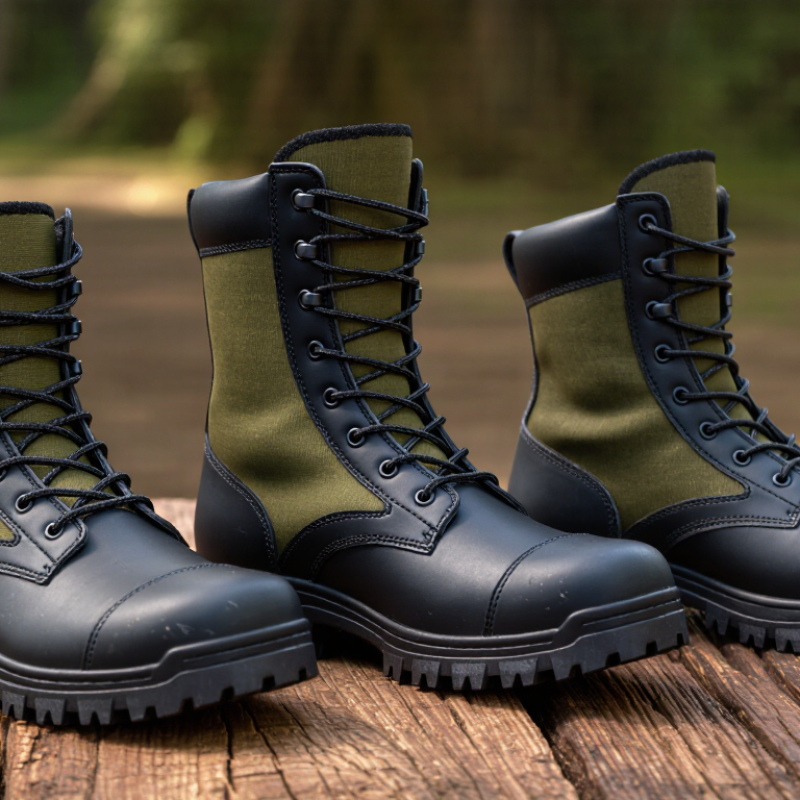
7 Tips for Buying Military Jungle Boots

Measure Foot Length and Width with a Brannock Device

Tip: Measure both feet with a Brannock device near the end of the day, when they may be slightly larger. Wear the socks you plan to use with your jungle boots. Seat your heel firmly against the device, then check the length at your longest toe. Do not assume both feet match.

Tip: Read the width measurement at the ball of your foot, not across the toes. A boot can feel roomy in front yet pinch at the widest part. Stand naturally while measuring, with your weight balanced. Keep your toes relaxed; curling them can distort the reading. Small detail, real difference.

Use the larger foot as your starting point when comparing sizes, but treat the device reading as a guide, not a guarantee. Boot lasts and sizing systems vary, and a Brannock device cannot measure every part of a boot’s shape. Try the boots with your usual socks and check for pressure along the sides, heel lift, and space ahead of your toes. A little toe room helps on uneven ground, though excessive movement can cause rubbing. I’d recheck a measurement if it seems surprising; it is easy to misread the width bar. Walk on a clean indoor surface before deciding.

Check Hot-Weather Requirements Against MIL-PRF-32432A

Hot-weather boots should be judged against the conditions you will actually face, not just a product description. MIL-PRF-32432A is a useful reference point, but check the exact revision and the purchasing documents that apply to your use. Requirements can change, and a vague “meets military standards” claim tells you little by itself. Ask for documentation tied to the specific boot model, rather than relying on a general statement.

Look for clear evidence of conformity, such as applicable test records or an official compliance document. Compare the listed construction and materials with the specification’s stated requirements; do not assume that mesh panels or a lightweight feel prove hot-weather performance. Details matter. Check how the upper, lining, sole, and seams are described, and ask the seller to clarify anything missing. If you cannot verify a claim, treat it as unverified.

Fit still matters, even when paperwork looks solid. Try boots with the socks you expect to wear, and walk on a firm surface long enough to notice heel slip or pressure across the toes. Small discomfort can grow. I would not buy solely from a size chart; foot shape and swelling vary in heat. That is an imperfect rule, but it is safer than trusting a label alone.

Compare Drainage, Ventilation, and Upper Materials

When comparing military jungle boots, look at drainage and ventilation as separate features. Drainage ports help water escape after a stream crossing, but they do not make boots dry instantly. Check that openings sit low enough to release water and are not easily blocked by mud. Ventilation depends more on the boot’s construction, lining, and fit. A breathable upper may reduce heat, yet thick socks or a tight fit can still trap moisture. Small details matter.

Upper materials involve trade-offs. Lightweight fabric often dries faster and bends easily, while leather or reinforced panels can resist abrasion around roots and rocks. Added reinforcement may also feel warmer and take longer to dry. Inspect seams and panel transitions; rough edges can rub during long walks. A common mistake is choosing the most breathable boot without considering the terrain. I would compare materials in the conditions you expect, rather than trust a label alone.

Tips: Wear your usual field socks when trying boots on. Check toe room and heel movement. If possible, walk on damp ground and notice where water drains, where heat builds, and whether seams press against your foot. Comfort can change after several hours.

Assess Outsole Grip Using ASTM F2913 Slip-Resistance Testing

When buying military jungle boots, do not judge outsole grip by lug depth alone. ASTM F2913 provides a controlled way to measure footwear slip performance with a whole-shoe test. A laboratory applies a defined load and movement across a selected test surface, then records friction results. That matters.

Check the report’s test conditions before comparing boots. The surface, contaminant, and testing setup can change the result, so two friction values are not automatically comparable. A smooth, wet floor is not jungle soil. In the field, water, slick roots, loose grit, and packed mud each challenge the tread differently. Widely spaced lugs may shed mud, while smaller contact features can help on firm, wet surfaces. No tread handles every condition equally well.

Treat ASTM F2913 data as one useful measure, not a promise of safety. The method does not create one universal pass score for every terrain or wearer. Look for clearly stated test conditions, and compare results from equivalent setups. Then inspect the boot itself: check that the lugs are well defined, the outsole bends without feeling flimsy, and the pattern has no smooth gaps where debris may pack in. A lab report cannot settle every choice. Fit and real terrain still deserve attention.

Inspect Stitching, Eyelets, and Sole Bonds for Durability

Military jungle boots take repeated flexing, wet ground, and grit at the seams. Inspect the stitching where the upper meets the toe and heel. Look for skipped stitches, loose thread, or holes that expose the seam. Check each eyelet for sharp edges, looseness, or cracked surrounding material; these can tear laces and weaken the upper. A slightly uneven stitch line may be cosmetic, so judge it alongside the surrounding material.

Tip: Bend each boot gently by hand. Watch the sole bond along the toe and sides. A visible gap, peeling edge, or dried adhesive line deserves caution. Press the sole near the heel, then flex it again; separation that opens under light pressure is a poor sign. Check both boots, not just the cleaner one.

The 2024 World Footwear Yearbook estimates 22.4 billion pairs were produced worldwide in 2023, but production volume says little about an individual boot’s durability. For a more objective measure, SATRA TM411 assesses sole adhesion strength, reported as force per unit width. That lab method cannot replace a close inspection, and an ordinary shopper cannot reproduce it accurately. Still, it helps explain why a neat-looking bond should be examined rather than assumed sound.

7 Tips for Buying Military Jungle Boots - Inspect Stitching, Eyelets, and Sole Bonds for Durability

Tip What to Inspect Durability Check Warning Signs
1. Check the stitching Examine seams around the upper, toe, heel, and points where panels meet. Look for even, secure stitches with no loose threads or gaps; gently flex the boot and watch whether seams stay closed. Skipped or unraveling stitches, uneven seam lines, and panels that pull apart when flexed.
2. Inspect eyelets and lace hardware Check every eyelet, hook, and the surrounding upper material. Confirm hardware is firmly seated, aligned, and free of sharp edges that could cut laces. Loose or bent hardware, cracked material around an eyelet, or hooks that snag the laces.
3. Examine the sole bond Follow the join between the outsole and upper around the toe, sides, and heel. Look for a continuous, even bond; gently flex the forefoot and check for separation. Visible gaps, lifting edges, uneven adhesive residue, or separation during flexing.
4. Check the outsole and tread Inspect the tread blocks, edges, and sole surface for consistent molding and defects. Choose a tread pattern appropriate for the terrain you expect; make sure the surface is intact and the edges are secure. Cracks, missing sections, unusually smooth areas on a new boot, or loose tread edges.
5. Assess upper materials and reinforcements Look over fabric, leather, or other upper materials, including reinforced areas around the toe and heel. Check for firmly attached reinforcements and material without cuts, weak spots, or poorly finished edges. Fraying, peeling, punctures, or reinforcement panels lifting from the upper.
6. Test fit and flex Try the boots on with the socks you expect to wear and walk on a level surface. Check for secure heel hold, enough room for your toes, and a natural bend at the forefoot without pressure points. Heel slipping, toes touching the front, painful rubbing, or stiffness that prevents a comfortable stride.
7. Review care and construction details Read the product information for materials, construction, and cleaning or drying guidance. Choose construction and care requirements suited to your use; follow the maker’s instructions to avoid damaging materials or bonds. Unclear construction details, missing care guidance, or care instructions that do not suit your intended conditions.