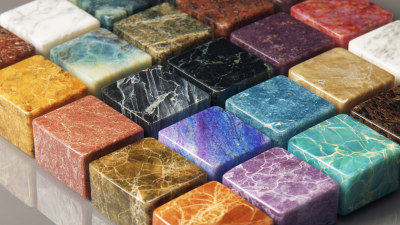
What Is Solid Surface Material and What Is It Used For?
Solid Surface is a man-made material valued for its smooth appearance, repairability, and flexible design options. It is commonly made from mineral fillers and acrylic or polyester resins. The exact recipe varies by brand, so performance details should always be checked against the manufacturer’s specifications.
Materials scientist Michael Ashby is known for his work on material selection and design. A useful principle from that work is: “Choose a material for the job it must do.” This is a paraphrase, not a verbatim quotation. For Solid Surface, that means looking beyond color samples. Consider how a counter will handle daily cleaning, warm cookware, sharp tools, and years of use.
The material can be cut and shaped into countertops, vanity tops, reception desks, wall panels, and integrated sinks. Seams can often be joined with inconspicuous adhesive, creating a continuous-looking surface. Small scratches may be repairable, depending on the product and finish. Still, no surface is indestructible. Heat can cause damage, and careless installation can leave visible seams or uneven edges.
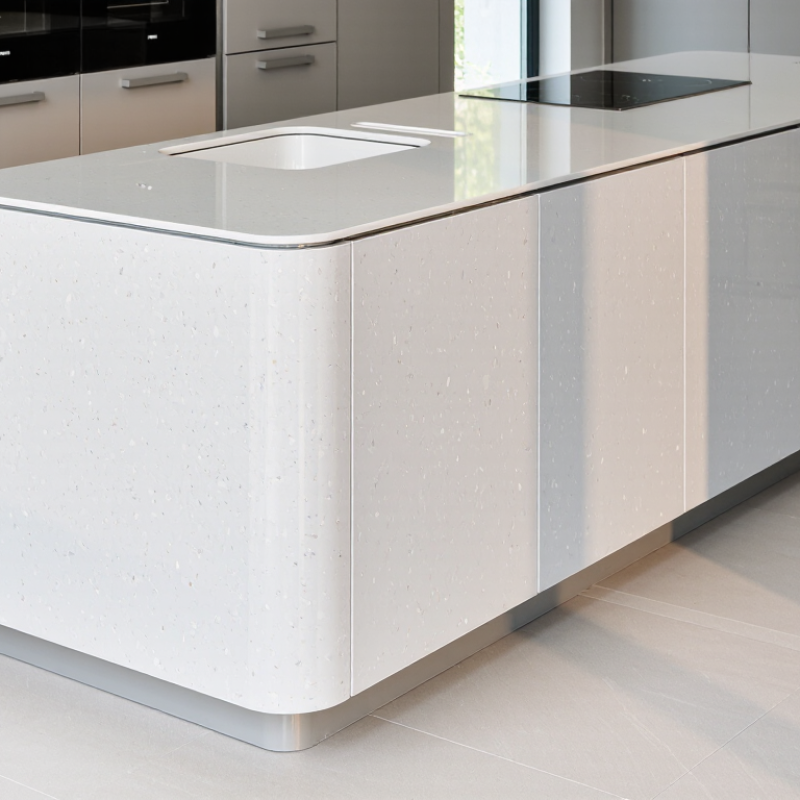
Picture a kitchen island with a built-in sink and a rounded edge. Solid Surface can make that design practical and visually continuous. But it may not suit every budget, workload, or style. Compare product guidance, installation quality, and maintenance needs before choosing. A sample under showroom lighting can look quite different at home. That detail is easy to miss.
What Solid Surface Material Is and How It Is Defined
Solid surface is an engineered, non-porous sheet material, not natural stone. It typically combines mineral filler, such as alumina trihydrate, with acrylic or polyester resin and pigments. The mixture forms a consistent material through its thickness. A cut edge therefore looks much like the face. Seams can be joined with matching adhesive and sanded, reducing visible gaps around sinks and counters. The exact recipe varies, so “solid surface” describes a material category, not one fixed formula.
ISO 19712-1 defines requirements and test methods for decorative solid-surfacing materials, including appearance and performance. That matters more than a polished sample alone. Ask for product-specific test documentation and check how the material performs under heat, staining, and impact. Grand View Research estimated the global solid-surface market at about US$5 billion in 2023, reflecting its broad use in kitchens, bathrooms, and commercial interiors. Market size, however, does not prove that every formulation performs equally. I would not assume so.
Tips: Inspect a finished edge and a seam sample. Look closely. Compare the technical sheet with your intended use, especially near cooktops and wet areas. A small detail can change the result.
What Solid Surface Is Made Of
Solid surface is an engineered material, not a single type of natural stone. Most formulations combine mineral filler, resin, and pigments. A common filler is alumina trihydrate, a fine white mineral powder. It gives the material body and helps create a smooth, consistent surface. The resin binds the particles together. Depending on the product, it may be acrylic, polyester, or a blend of both. Pigments add color and can create subtle veining or a more uniform appearance.
The ingredients are mixed and formed into sheets or molded shapes, then cured. The exact recipe varies, so two materials with similar appearances may behave differently during fabrication. That detail matters. A fabricator considers the resin type, thickness, and intended use before cutting or joining pieces. Seams can often be made inconspicuous with a compatible adhesive, though the result depends on careful workmanship.
It is not solid stone. Its composition is more uniform through the material, which allows scratches and small surface damage to be sanded in many cases. Still, heat can mark some formulations, and deep damage may need professional repair. The phrase “solid surface” sounds simple; the material itself is less so. Checking technical specifications is wiser than assuming every sheet has the same properties.
How Solid Surface Material Is Manufactured
Solid surface material is manufactured by combining mineral filler with a polymer resin, often acrylic or polyester. The filler commonly includes alumina trihydrate, a fine white powder that gives the finished sheet much of its body. Pigments add color, while small amounts of other ingredients help control processing and performance. Exact recipes vary, so not every sheet behaves identically.
The ingredients are blended until the mixture looks uniform, then poured into a mold or formed as a sheet. Vacuum mixing may help remove trapped air, which can otherwise leave visible pinholes. The material is cured under controlled conditions. After curing, sheets are trimmed, calibrated to an even thickness, and sanded. Small details matter. A slight color or thickness variation can become noticeable across a large countertop.
For shaped parts, workers can heat some solid surface formulations and press them into a mold. Installers can also join pieces with color-matched adhesive, then sand the seam nearly flush. That helps create a continuous-looking surface, though lighting may still reveal a faint line. The process sounds tidy on paper, but heat, mixing, and finishing all need close control. I would not assume every product can be thermoformed; the manufacturer’s technical data should confirm its limits.
Key Properties That Shape Its Performance
Solid surface is an engineered material made from mineral fillers and acrylic or polyester resins. It is commonly shaped into countertops, vanity tops, wall panels, and integrated sinks. The material’s consistent color and composition make small scratches easier to repair than scratches in many layered surfaces. Seams can also be joined with adhesive and sanded to look less visible. Results depend on workmanship.
Its nonporous surface resists many everyday stains and does not require routine sealing. Spilled coffee or water can usually be wiped away with a soft cloth. Still, “stain-resistant” does not mean stain-proof. Strong dyes, harsh chemicals, or neglected spills may leave marks. Solid surface is also less tolerant of direct heat than stone; a hot pan can discolor or damage it. Some damage can be sanded out, but deep burns may need professional repair. Not every mark disappears.
Tips: Use a trivet beneath hot cookware and clean spills promptly. Ask for a sample to check color and finish under your kitchen lighting. Seams may be subtle, not invisible.
What Is Solid Surface Material and What Is It Used For?
Key Properties That Shape Its Performance
Common nominal sheet thicknesses are shown in millimetres; availability varies by product. Solid surface is a nonporous, repairable material that can be fabricated with inconspicuous seams. It is commonly used for countertops, vanity tops, and wall cladding. Thickness is one factor in performance; design and support also matter.
Common Uses of Solid Surface in Homes and Businesses
What Is Solid Surface Material and What Is It Used For?
Common Uses of Solid Surface in Homes and Businesses
Solid surface is a manufactured material made from mineral fillers and resin. It is often chosen for countertops because seams can be joined with little visible interruption. In a kitchen, that can mean a smooth worktop around a sink, with fewer crumbs caught in gaps. It also suits bathroom vanities, shower walls, and window sills. The material can be shaped, so curved edges and integrated basins are possible. A useful detail.
In businesses, solid surface appears at reception desks, laboratory worktops, and counters in clinics or salons. Its smooth, nonporous surface is straightforward to clean, which helps in spaces where spills and frequent wiping are routine. It can also create a consistent look across a long counter.
Still, the material is not indestructible. Hot pans may damage it, and knives can leave scratches. Use a cutting board.
One practical advantage is repairability: some minor marks can be sanded out by a trained installer. But results depend on the product, finish, and depth of damage. That part is easy to overlook. Solid surface may suit a busy family bathroom better than a surface that shows every water mark, yet it may not be the best choice beside a very hot cooking area. Compare how the space is used, not just how the sample looks under showroom lights.