
Blog

How to Choose the Best Toiletry Organizer Bag for Travel

A good Toiletry Organizer Bag does more than hold shampoo and a toothbrush. It keeps small essentials visible, separates damp items, and prevents a loose cap from coating your clean shirt. The right choice depends on your routine: a weekend traveler may need only a slim pouch, while a longer trip can call for divided compartments and a sturdy hanging hook. Look closely at zipper quality, wipe-clean lining, pocket depth, and how the bag fits inside your usual luggage. Small details matter.

Professional organizer Marie Kondo offers a useful guiding principle: “The question of what you want to own is actually the question of how you want to live your life.” Her words are not about toiletry bags specifically, but they encourage a practical question: which products do you genuinely use on the road? Pack those first, then choose a bag that fits them without forcing every bottle into a crowded corner. A mirror, a soft toothbrush sleeve, or a leak-resistant pocket may matter more than extra capacity. Less can work.

No bag is perfect. A hanging design saves counter space, yet may feel bulky in a small suitcase. In this guide, we’ll compare materials, layouts, size, and travel-friendly features so you can choose a Toiletry Organizer Bag that suits your habits—not just its product photos.
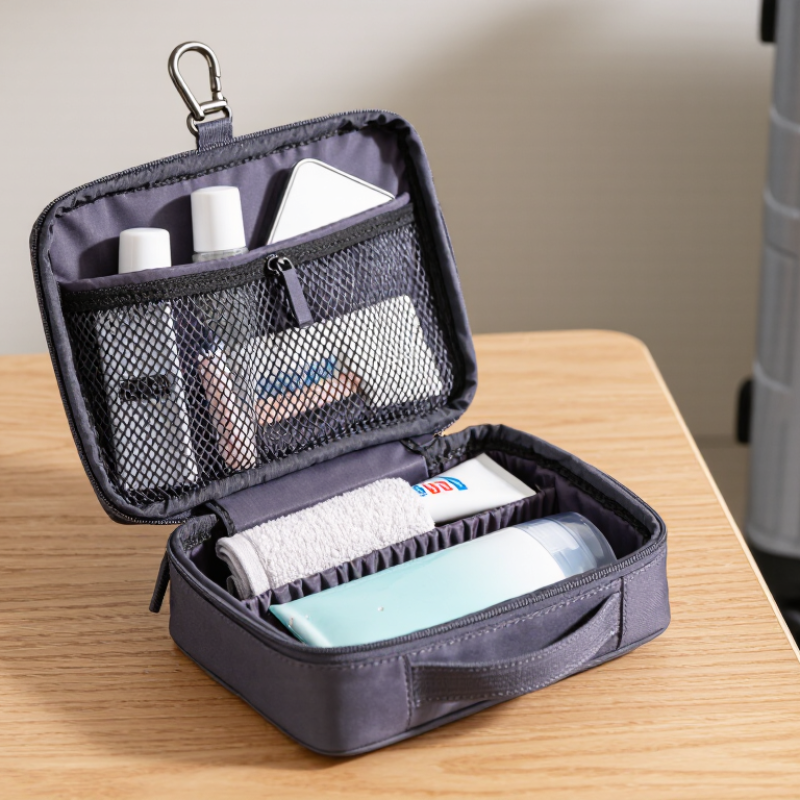
How to Choose the Best Toiletry Organizer Bag for Travel

Define Trip Length, Toiletry Volume, and Airline Carry-On Constraints

Choose a toiletry organizer by counting the days, not by guessing at the bag size. For a weekend, a compact pouch may hold a toothbrush, small cleanser, deodorant, and daily skincare. Longer trips need more room, but avoid packing a full-size bottle for a short stay. Small trips need less. Lay your toiletries on a towel and group them by routine. This makes your actual volume easier to judge.

Tips: Check your airline’s current carry-on rules before packing liquids; limits and screening procedures can vary by route and airport. Keep travel-size containers together in a clear, accessible pouch if required. Choose an organizer that fits your personal item or carry-on without forcing the zipper closed. A few centimeters matter when the bag is already crowded.

Think about how you use the organizer, too. Separate damp items from dry ones, and look for pockets that keep small items from sinking to the bottom. A hanging hook can help in a cramped bathroom, but it adds little value if you rarely hang bags. Packing estimates are never perfect. I still overpack sometimes. Test your chosen bag at home, then remove anything you did not use on your last trip.

Apply the TSA 3-1-1 Liquids Rule: 100 mL (3.4 oz) per container

When choosing a toiletry organizer for air travel, check how its liquids pouch fits the TSA 3-1-1 rule. For U.S. security screening, each liquid, gel, cream, or paste must be in a container holding 100 mL (3.4 oz) or less. The container’s labeled capacity matters, not how much product remains inside. Place your containers in one clear, quart-sized bag, with one such bag allowed per passenger. It adds up. A half-empty, oversized bottle still may not meet the size limit, so transfer toiletries into travel-size containers before packing.

Look for an organizer with a removable, transparent pouch and a zipper that closes without forcing it. A wipe-clean lining helps when shampoo leaks, though no bag is truly leakproof. Keep the pouch near the top of your carry-on so it is easy to remove at screening. It can feel cramped. That is a useful prompt to pack only what you will use: a small face wash, toothpaste, and moisturizer can take up more space than expected. Check current TSA guidance before departure, especially if your route includes other countries, where screening requirements may differ.

How to Choose the Best Toiletry Organizer Bag for Travel - Apply the TSA 3-1-1 Liquids Rule: 100 mL (3.4 oz) per container

Organizer Bag Type Best For Useful Features How to Pack Liquids What to Check Before Buying
Clear quart-size pouch Travelers who want to keep carry-on liquids together and easy to inspect. Transparent material, a secure closure, and a shape that opens easily. Place containers of 100 mL (3.4 oz) or less inside. The containers must fit in one quart-size bag. Check that the pouch is genuinely quart-size and can close with your planned containers inside.
Hanging toiletry organizer Trips where bathroom counter space is limited and toiletries need to hang within reach. A hanging hook, wipe-clean compartments, and a foldable design. Use it for general toiletries. Keep carry-on liquids in the required quart-size bag unless the organizer itself meets that requirement. Look for a compact folded shape and compartments that keep bottles upright and separated.
Compartmentalized toiletry case Travelers carrying a mix of toiletries, grooming tools, and non-liquid items. Separate pockets, a structured opening, and materials that are easy to clean. Separate liquids from dry items; keep carry-on liquid containers at or below 100 mL (3.4 oz) each in the quart-size bag. Choose compartments that suit the items you actually pack without making the case unnecessarily bulky.
Soft, lightweight pouch Minimal packers and travelers who need an organizer that takes up little space. Low-bulk fabric, a simple closure, and a flexible shape. Use as an outer organizer, or as the liquids bag only if it meets the quart-size requirement and can close properly. Check the material, seams, and closure; a soft pouch may offer less protection against leaks or crushing.
Leak-resistant lined pouch Travelers who want extra protection for toiletries that may leak. A wipeable lining, sealed seams, and a closure that stays shut. Extra leak protection does not change the carry-on liquid limits. Pack qualifying liquids in the quart-size bag. Confirm that the lining is easy to clean and that the pouch is not being mistaken for an exemption from liquid rules.

Carry-on reminder: Under the TSA 3-1-1 liquids rule, each liquid, gel, or aerosol container must hold 100 mL (3.4 oz) or less. All such containers must fit in one quart-size bag per passenger. The container’s labeled capacity matters, even if it is only partly full. Check current airport and destination rules before departure.

Compare Materials, Leak Resistance, and Water-Resistant Linings

When comparing toiletry organizers, check the outer fabric and the lining separately. Coated nylon is light and often dries quickly, while thicker polyester may hold its shape better. Neither material makes a bag leakproof on its own. A small shampoo bottle can still seep through a zipper or stitched corner. Look for a wipe-clean lining with sealed or neatly finished seams. Feel the fabric, too; very thin coatings can crack after repeated folding.

Water-resistant linings help contain damp items and minor spills, but they are not a substitute for careful packing. Keep liquids in tightly closed bottles, then place them upright in a separate pouch if leakage would ruin clothing. Check whether the lining reaches the top edge, where splashes can escape. A wide opening makes cleanup easier. So does a pale interior, where dried residue is easier to spot. There are trade-offs: heavily coated linings may feel stiff, and textured fabrics can trap grime around seams. I would inspect those details before choosing, though it is easy to overlook them in a shop. A quick test with a damp cloth can reveal whether the lining wipes clean without leaving a slick residue.

Assess Compartments, Hanging Hooks, and Visibility for Easy Access

How to Choose the Best Toiletry Organizer Bag for Travel

A useful toiletry bag keeps daily items visible and prevents small bottles from settling into a damp, crowded corner. Check whether compartments fit what you actually pack: a toothbrush, a comb, travel-size bottles, and any small grooming tools. Wide pockets suit bulky containers, while narrow sleeves can hold brushes upright. Too many sections can become frustrating, though. Choose a layout you can understand at a glance, even when you are tired or packing in a hurry.

A hanging hook helps when counter space is limited. Look for a sturdy hook that turns easily and a strap or loop that keeps the bag steady on a towel rail. Check the fabric around the attachment; a full bag can pull hard on weak stitching. Visibility matters, too. A clear pocket or light-colored lining makes it easier to spot a small tube without unpacking everything. Still, transparent panels may show spills, so consider how easily they wipe clean.

Tips: Test it loaded. Pack your usual items, hang the bag, and open each pocket. Notice whether bottles tip over or the zipper catches. Small details matter. I’d also leave a little spare room; a perfectly packed bag can be awkward to close, and that is easy to overlook when shopping.

Verify Bag Dimensions, Weight, and Cleaning Requirements Before Buying

A toiletry organizer should fit the products you actually pack, not an imagined travel kit. Measure your tallest bottle and widest container at home. Then compare those measurements with the bag’s usable interior, allowing room for seams and pockets. A listed size can describe the outside only. Check whether the compartments stretch or flatten when filled. Small detail, big difference.

Weight matters too. Weigh the empty bag on a kitchen scale, then estimate its weight with your usual toiletries inside. A heavy frame or thick lining can make a compact organizer surprisingly cumbersome. I once chose a sturdy bag that looked ideal online, but it took up more space than expected. I had not checked its depth. That was my mistake. If you travel with a packed carry-on, consider how easily the bag fits beside clothing and whether its shape compresses without crushing containers.

Cleaning requirements are easy to overlook. Look for care instructions before buying, especially if the lining may meet damp items or small spills. A wipe-clean interior is convenient, while fabric pockets may need hand washing and longer drying time. Check whether the bag can be opened wide enough to reach its corners. I prefer removable dividers, though they can shift around. Think about where you would air-dry it after washing, not just how simple it seems to clean.