Why Choose Robot CNC for Your Manufacturing Needs?
In recent years, the manufacturing landscape has evolved significantly. Robot Cnc technology stands at the forefront of this transformation. According to a report by the International Federation of Robotics, the use of robotic automation in manufacturing has increased by 16% since 2021. This growth reflects a critical shift towards efficiency and precision.
Many manufacturers are now realizing the benefits of integrating Robot CNC systems. These machines enhance productivity by delivering consistent and accurate results. Industry experts estimate that implementing robotic solutions can reduce production costs by up to 30%. However, not every business has seen smooth transitions. Some faced challenges in adapting to these advanced systems.
Despite the hurdles, the advantages of Robot CNC systems are clear. Companies that leverage these technologies often experience improved product quality and shorter lead times. As businesses seek competitive advantages, Robot CNC solutions continue to gain traction. Nevertheless, careful planning and training are essential for successful implementation.
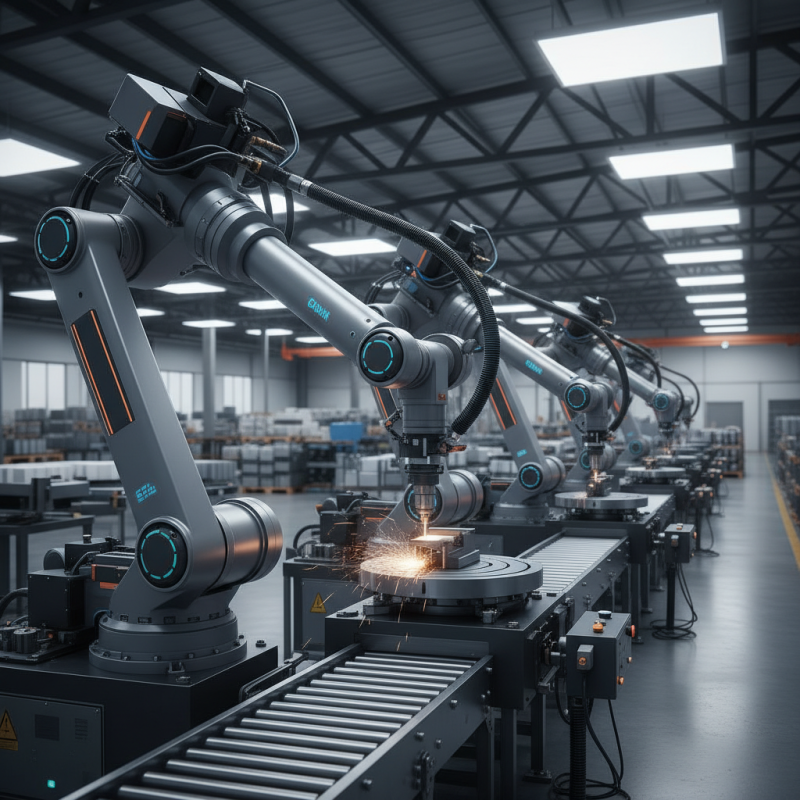
Benefits of Robot CNC in Modern Manufacturing Environments
In modern manufacturing, Robot CNC stands out for its precision and efficiency. It utilizes advanced algorithms to enhance productivity. With automated processes, factories can achieve higher output rates without sacrificing quality. This technology reduces human error, leading to consistent results across production runs.
Another important aspect is versatility. Robot CNC machines can handle different materials, from metals to plastics. This flexibility allows manufacturers to adapt to various projects quickly. It also minimizes the need for multiple machines, saving space and costs. However, integrating this technology requires training and adjustments in workflow.
Maintenance is crucial for longevity. Regular checks ensure optimal performance. Yet, if not managed properly, downtime can occur, affecting productivity. Manufacturers must find the right balance between automation and human oversight. This approach fosters a more reliable manufacturing environment, blending innovation with traditional practices.
Cost Efficiency: Comparing Traditional vs. Robot CNC Operations
Manufacturing efficiency has become critical in today’s competitive landscape. Robot CNC operations stand out due to their cost efficiency compared to traditional methods. The initial investment may seem high, but the long-term savings are significant. Automation reduces labor costs and minimizes human error. This ultimately leads to better product consistency and quality.
Traditional CNC machines require skilled operators who may not always be available. Training new staff can be time-consuming and costly. In contrast, Robot CNC systems require less human intervention. They can operate continuously, which can greatly enhance productivity. However, the adaptation phase can be challenging. Businesses must consider the transition time and potential teething problems.
Further, maintenance costs for robot CNC machinery can vary. While they are generally low, unexpected repairs may arise. Organizations should be prepared for these scenarios. Implementing these systems also requires a cultural shift within the organization. Employees may need to embrace new roles that focus on oversight rather than hands-on operations. Balancing these factors is crucial for maximizing the benefits of robot CNC technology.
Precision and Accuracy: Industry Standards in CNC Machining
In today's manufacturing landscape, precision and accuracy stand as critical benchmarks in CNC machining. According to a report by the National Institute of Standards and Technology (NIST), companies utilizing CNC technology can achieve tolerances within 0.001 inches. This level of precision is essential for industries such as aerospace and medical devices, where even the smallest deviation can lead to significant failures.
Robot CNC systems are designed to enhance this precision further. They utilize advanced algorithms and high-quality mechanical components to maintain consistent performance. A study from the American National Standards Institute (ANSI) highlights that automated CNC operations can reduce errors by up to 30% compared to manual machining. This reduction not only increases product reliability but also boosts operational efficiency.
However, businesses must also confront challenges in adopting such technology. The initial investment can be hefty, and training staff requires time and resources. Furthermore, the reliance on automated systems raises concerns about potential job displacement and the need for ongoing maintenance. Balancing these factors is crucial for companies aiming to improve their machining processes while navigating industry demands.
Precision and Accuracy in CNC Machining
Increased Production Speed: Data on Time Savings from Automation
In today's manufacturing landscape, automation, especially through Robot CNC technology, is a game-changer. A recent report from the National Association of Manufacturers noted that companies utilizing CNC automation reported time savings of up to 50%. This increase in production speed translates directly to significant cost reductions. With robots operating at consistent and accurate speeds, manufacturers can produce more products in less time, enabling them to meet client demands efficiently.
Embracing Robot CNC technology also enhances quality control. According to a study by McKinsey, automation can reduce defects by 30% or more. This not only results in higher product standards but also decreases waste in the production process. However, companies need to reassess their processes regularly. Misalignment in automation adoption and workforce training can lead to inefficiencies.
Tip: Assess your current workflow. Identify bottlenecks that can benefit from automation.
Moreover, ongoing maintenance of Robot CNC systems is crucial. Downtime can negate the time savings gained through automation. A report from the Institute for Advanced Manufacturing highlights that with regular maintenance, businesses can improve their operational uptime by up to 25%. Ignoring upkeep often leads to unexpected challenges in production.
Tip: Schedule routine checks on robot systems to ensure operational efficiency.
Flexibility in Manufacturing: Adapting to Market Demand with Robot CNC
As the manufacturing landscape evolves, Robot CNC technology is central to meeting market demands. This flexibility allows businesses to swiftly adapt to changes in production volumes and specifications. According to a report by the International Federation of Robotics, by 2025, the global market for industrial robots is expected to reach $75 billion. This growth underscores the increasing reliance on robotic systems to enhance operational efficiency.
Robot CNC systems can handle diverse tasks, such as milling, drilling, and cutting. They offer precision and speed that traditional methods often cannot match. A study from Deloitte highlights that 67% of manufacturers believe automation improves overall productivity. However, some companies face challenges in integrating these systems. The initial investment can be high, and adapting existing workflows requires careful planning.
Moreover, the human element remains crucial. Workers must be trained to manage and maintain these advanced machines. The balance between automation and human insight can be complex. Companies sometimes underestimate the importance of this training, leading to underutilization of the technology. Revisiting the integration process, to ensure it aligns with corporate culture and employee capabilities, is essential for lasting success.
Why Choose Robot CNC for Your Manufacturing Needs?
| Feature | Description | Benefit | Market Adaptability |
| Precision Machining | Achieves high levels of accuracy and repeatability. | Reduces waste and increases product quality. | Can quickly switch between different product demands. |
| Speed | Enhanced speed in production processes. | Increased output and efficiency. | Meets tight deadlines without compromising quality. |
| Flexibility | Easily configurable for various design specifications. | Accommodates customization and product variation. | Allows rapid adaptation to changing market needs. |
| Cost-Effectiveness | Lower operational costs over time. | Higher profit margins for manufacturers. | Maintains competitiveness in dynamic markets. |
| Automation | Reduces manual labor requirements. | Decreases labor costs and enhances safety. | Facilitates scalability for growing demand. |