
10 Best Stone Surfaces for Kitchens and Bathrooms
Choosing the right stone surface can change how a kitchen or bathroom feels, functions, and ages. A bright marble island may create an elegant focal point, while durable granite can handle busy family cooking. Soapstone offers a softer, matte character, and quartzite can deliver dramatic veining with impressive hardness. Each material brings advantages and compromises.
There is no universal “best” stone.
Real-world performance depends on moisture, heat, cleaning habits, and installation quality. In kitchens, countertops face hot pans, acidic foods, knives, and frequent spills. Bathrooms create different challenges, including constant humidity, cosmetics, and standing water near sinks and showers. Porous stones may require sealing, but sealing does not make them maintenance-free. Even resistant materials can stain or chip when poorly installed.
This guide examines ten leading Stone Surfaces for kitchens and bathrooms. It considers durability, appearance, maintenance, cost, and suitability for different lifestyles. Granite, marble, quartzite, soapstone, limestone, travertine, slate, and other carefully selected options will be compared. The discussion also separates natural stone from engineered alternatives, since their care requirements differ significantly.
Ask for physical samples.
Lighting can alter color dramatically. A showroom sample may look calm under warm lights but appear gray beside a window. I recommend testing samples near cabinet doors, flooring, and plumbing fixtures. Check the supplier’s technical information, maintenance instructions, and warranty terms before committing. Some recommendations may seem obvious, yet practical details often matter more than trend appeal. A beautiful surface that demands constant caution may become frustrating over time. The strongest choice balances visual character with the habits of the people using the space.
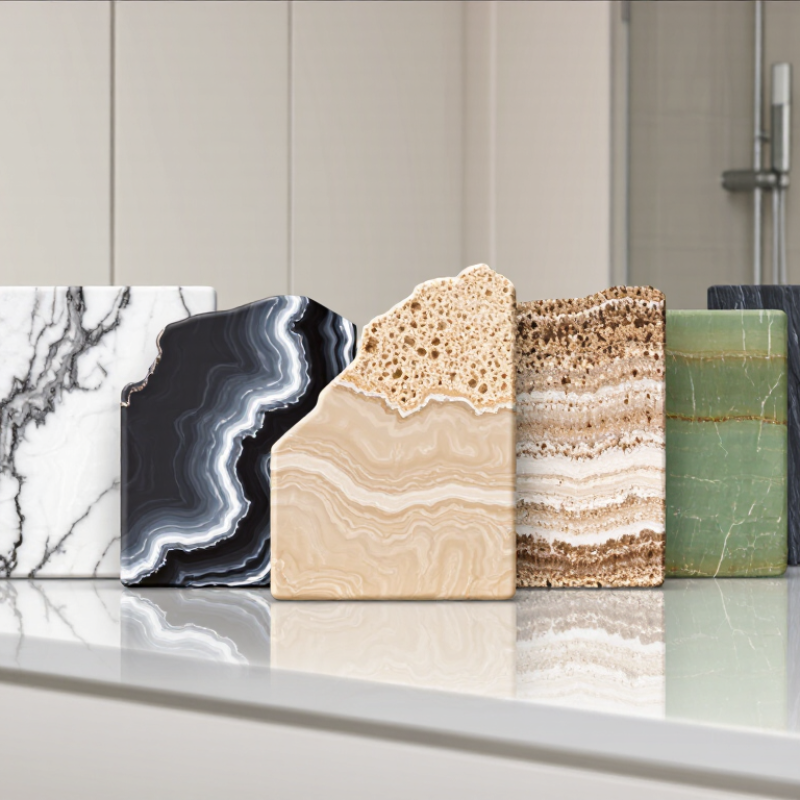
Table of Contents
[Hide]
Types of Stone Surfaces for Kitchens and Bathrooms
10 Best Stone Surfaces for Kitchens and Bathrooms
Choosing a stone surface starts with use, not appearance. Granite handles busy kitchen counters well because it resists heat, scratches, and daily spills. Marble offers soft veining and a cool feel, but lemon juice can etch its surface. Quartzite provides a marble-like look with stronger scratch resistance, although it still needs careful sealing. Soapstone feels smooth and warm, and small scratches can often be sanded away. It suits farmhouse kitchens and understated bathrooms.
Limestone brings a calm, natural texture to walls and vanity tops. Travertine adds visible pores and earthy character, but those holes require filling and regular maintenance. Slate supplies deep color and strong grip, making it useful for bathroom floors. Sandstone feels tactile and rustic, though its porosity demands reliable sealing. Onyx creates dramatic, translucent panels for feature walls, yet it needs gentle handling. Engineered quartz offers consistent patterns and low maintenance, but it is not completely immune to heat damage.
Think beyond the sample board. In one renovation, a pale porous stone looked beautiful beside a sink but showed every water mark within days. That choice needed more planning. Ask about porosity, finish, thickness, edge design, and maintenance before installation. Honed surfaces hide scratches better than polished ones. Textured floors can improve traction, but deep grooves collect soap and dust. A qualified fabricator should inspect slabs for cracks and confirm that supports match the stone’s weight. Some details matter.
10 Best Stone Surfaces for Kitchens and Bathrooms - Types of Stone Surfaces for Kitchens and Bathrooms
| Stone Surface | Typical Appearance | Approximate Mohs Hardness | Porosity | Heat Resistance | Maintenance | Best Kitchen Applications | Best Bathroom Applications | Main Advantages | Important Considerations |
|---|---|---|---|---|---|---|---|---|---|
| Granite | Speckled or veined patterns in a wide range of neutral and vivid colors. | 6–7 | Low to medium; depends on the slab and finish. | Excellent; brief contact with hot cookware is generally tolerated, although trivets are recommended. | Seal periodically as recommended for the specific stone; clean spills promptly. | Countertops, islands, backsplashes, and work surfaces. | Vanity tops, shower thresholds, shelves, and wall panels. | Hard, scratch-resistant, durable, and suitable for heavy daily use. | Some varieties require sealing, and the visual pattern can vary significantly from slab to slab. |
| Marble | Distinctive veining with a refined appearance, commonly in white, gray, beige, or green tones. | 3–5 | Medium to high; the surface is vulnerable to staining and acid etching. | Good, but sudden temperature changes should be avoided. | Use pH-neutral cleaners, wipe acids quickly, and reseal when necessary. | Baking counters, islands, decorative backsplashes, and low-abrasion areas. | Vanities, shower walls, tub surrounds, and feature panels. | Timeless appearance, naturally cool surface, and excellent design versatility. | Can scratch, etch, and develop a patina; acidic foods and cleaners may dull the finish. |
| Quartzite | Often resembles marble, with flowing veins and a crystalline or layered appearance. | 7 | Low to medium; some varieties are more absorbent than others. | Very good; protective pads are still advisable for prolonged exposure to heat. | Periodic sealing may be needed; clean with mild soap and water. | High-use countertops, islands, and areas requiring strong scratch resistance. | Vanity tops, shower walls, and tub surrounds. | Very hard, durable, heat-resistant, and more scratch-resistant than marble. | Confirm that the material is true quartzite; sealing requirements vary by stone. |
| Soapstone | Soft, matte appearance in charcoal, gray, green-gray, or nearly black shades. | 1–2.5 | Very low; it is naturally dense and nonabsorbent. | Excellent; it tolerates hot cookware better than many other natural stones. | Minimal cleaning; mineral oil can be applied to deepen and even out the color. | Sinks, countertops, worktops, and areas exposed to heat or spills. | Sinks, vanity tops, and shower shelves. | Nonporous, heat-resistant, chemically resistant, and easy to maintain. | It scratches and dents more easily because it is relatively soft; scratches can often be sanded or left as patina. |
| Limestone | Soft, natural colors such as cream, beige, gray, and muted brown with subtle fossil or grain details. | 3–4 | Medium to high. | Good with normal precautions. | Requires sealing and pH-neutral cleaning; acidic products can etch the surface. | Low-use counters, backsplashes, islands, and decorative surfaces. | Wall cladding, vanity tops, tub surrounds, and low-traffic floors. | Warm, understated appearance and a natural, softly textured feel. | More prone to scratching, staining, and etching than granite or quartzite. |
| Travertine | Warm ivory, beige, tan, or brown tones with characteristic pores and linear movement. | 3–4 | Medium to high; natural holes may be filled or left open. | Good with appropriate installation and heat protection. | Seal regularly, use neutral cleaners, and avoid abrasive products. | Backsplashes, accent areas, island cladding, and lightly used counters. | Shower walls, bathroom floors, vanity surrounds, and decorative niches. | Warm appearance, naturally textured surface, and strong design character. | Requires careful sealing; open pores can collect moisture, dirt, or soap residue. |
| Slate | Layered, cleft texture in charcoal, black, gray, green, purple, or rust-colored tones. | 3–5 | Low to medium, depending on composition and finish. | Good; use trivets for prolonged contact with hot cookware. | Seal when needed and clean with a pH-neutral stone cleaner. | Backsplashes, flooring, hearth areas, and selected work surfaces. | Flooring, shower floors, wall panels, and vanity surrounds. | Textured appearance, good slip resistance when properly finished, and strong color variation. | Uneven cleft surfaces can be difficult to wipe clean; some slate may flake or require resealing. |
| Onyx | Translucent bands and dramatic patterns, often in cream, honey, green, brown, or reddish tones. | 3–4 | Medium to high. | Moderate; avoid direct or prolonged heat exposure. | Use gentle cleaners, seal as recommended, and protect from scratching and staining. | Decorative backsplashes, bar areas, islands, and low-impact feature surfaces. | Vanity fronts, wall panels, shower accents, and illuminated feature walls. | Highly distinctive appearance and translucence that can be enhanced with backlighting. | Relatively soft and vulnerable to scratching, etching, staining, and impact damage. |
| Basalt | Fine-grained, uniform gray to charcoal or black appearance with a modern architectural character. | 6 | Low to medium, depending on the stone and finish. | Very good under normal household conditions. | Clean with a pH-neutral product; sealing may be advisable for some finishes. | Countertops, islands, backsplashes, and contemporary work surfaces. | Vanities, shower walls, flooring, and tub surrounds. | Durable, understated, scratch-resistant, and well suited to minimalist interiors. | Dark finishes may show fingerprints, water spots, and oil marks more readily. |
| Sandstone | Earthy shades including tan, cream, gold, red, brown, and gray with visible grain. | 6–7 | Medium to high; porosity varies considerably by composition. | Good with suitable installation and routine protection. | Needs thorough sealing and gentle cleaning; spills should be removed promptly. | Backsplashes, accent walls, pantry areas, and low-use counters. | Wall cladding, shower accents, floors, and decorative niches when properly sealed. | Natural texture, warm color palette, and strong visual connection to outdoor materials. | Absorbs moisture and staining substances more readily than dense stones; not ideal for heavily exposed wet areas without proper treatment. |
Note: Hardness, porosity, heat resistance, and maintenance requirements can vary within each stone category according to mineral composition, finish, thickness, and sealing condition.
Related Posts
-
Ultimate Guide to Choosing the Best Stone Countertop for Your Home Renovation
-

Unlocking the Benefits of Best Quartz Stone Countertops for Modern Kitchens and Bathrooms
-

Ultimate Guide to Choosing the Perfect Stone Surfaces for Your Home Decor
-

Revamping Your Space with the Ultimate Countertop Kitchen Design Ideas for Every Style
-
Unmatched Craftsmanship: Discover the Finest Cambria Stone Countertops from China's Premier Factory
-

7 Reasons Why the Best Commercial Countertop Is Essential for Your Food Business Success