
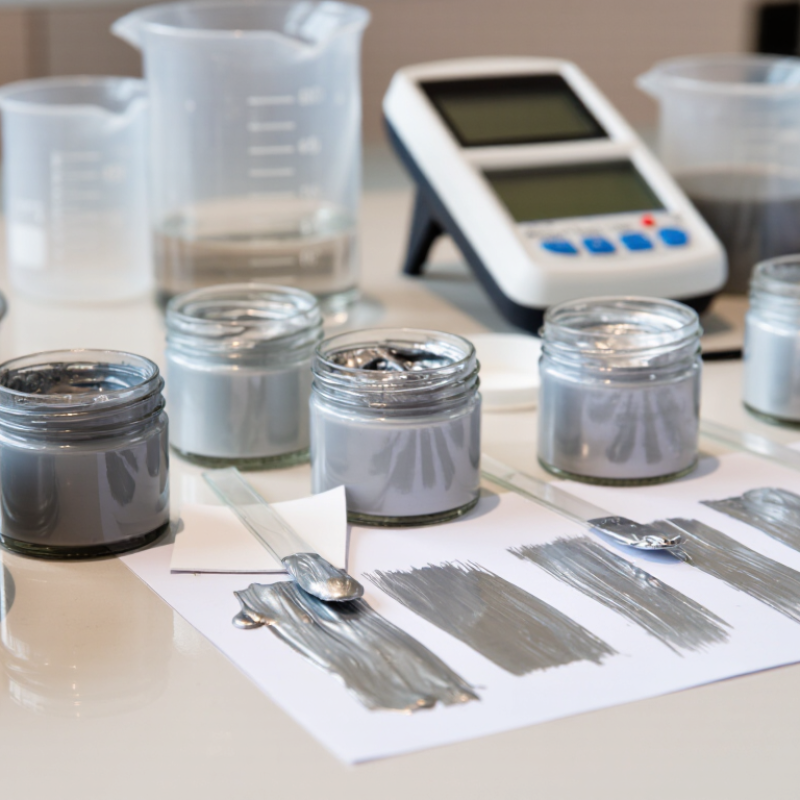
Choosing a Screen Printing Silver Paste supplier is not simply a matter of comparing prices. Paste performance can affect conductivity, print definition, adhesion, and production consistency. A sample that looks smooth in a jar may behave differently across a mesh or after curing. Small details matter.
This guide introduces five suppliers for buyers to evaluate, with attention to product range, technical documentation, customization, and support. Useful questions include whether a supplier provides clear viscosity and curing data, offers representative samples, and can discuss the intended substrate and printing process. Those details help buyers judge fit rather than rely on broad claims. Not always. A well-known name may not suit every production line, and a lower quote may exclude important support or testing.
Before placing a large order, compare datasheets and test paste under realistic conditions. Check print consistency, cured-film performance, packaging, and communication during sampling. Ask how the supplier handles specification changes and what information it needs to recommend a grade. Keep test records; small differences in mesh, squeegee pressure, or curing conditions can change results. That takes testing.
No supplier can guarantee success without understanding the buyer’s process. This comparison is a starting point, not a substitute for technical validation. Some requirements will only become clear after a trial run, and that is worth acknowledging. The strongest choice is the supplier whose documented capabilities, responsiveness, and material performance match the application.
Silver’s bulk resistivity is about 1.59 µΩ·cm at 20°C, making it a useful reference when assessing screen-printing silver paste. This value describes dense, pure silver, not a printed trace. A paste contains silver particles, binders, and other ingredients, so its cured film usually has higher resistance. That distinction matters.
Particle shape and size affect how well the silver forms conductive pathways. Flake-rich formulations may pack differently from spherical-particle blends. After printing, film thickness, curing conditions, and substrate surface also influence the result. Even a small change in mesh or squeegee pressure can alter line width and resistance. I would not treat the bulk figure as a performance promise. It is only a starting point.
When comparing suppliers, request resistivity or sheet-resistance data alongside the test method, cured thickness, and curing schedule. Ask for sample prints on your intended substrate. Measure several lines, not just one; small variations are real. Check adhesion and flexibility too, especially if the part will bend. A supplier’s data sheet may look tidy, while your production setup behaves less neatly. That gap deserves attention.
When comparing silver paste suppliers, request cured resistivity measured with the same curing schedule and test method. NIST’s electrical-conductivity reference gives bulk silver conductivity near 6.3 × 10⁷ S/m, equivalent to about 1.59 µΩ·cm. Printed films are less conductive because binders, porosity, and particle contacts add resistance. That gap matters. Ask suppliers for the cured-film value, sample thickness, and test conditions—not just a headline number. I would not treat one low result as a guarantee; it can hide a narrow process window.
Tips: Test on your actual substrate. Record cure temperature, dwell time, and mesh count. A paste that cures at a lower temperature may suit heat-sensitive parts, but confirm its resistance after curing. ISO 9044 covers technical requirements and testing for industrial woven wire cloth; use it when checking mesh specifications, then verify print quality in a trial.
Mesh affects how much paste passes through and how sharply fine lines print. A tighter mesh can improve detail, yet may restrict deposition or clog with a coarse formulation. Compare supplier recommendations against your target line width and film thickness. Keep the squeegee, stencil, and print speed consistent during trials. Test it twice. Small changes can shift results, and supplier data may not match your press.
For screen-printing silver paste, compare suppliers by application fit, not reputation alone. The five profiles worth assessing include broad electronics-material providers, high-purity conductive-paste specialists, adhesive-focused formulators, printing-ink developers, and custom-batch manufacturers. Each may suit a different substrate or production setup. Ask for viscosity ranges, recommended mesh sizes, curing conditions, and typical sheet-resistance data. A supplier should explain how these figures were measured. Small differences matter.
Request samples and print them using your actual screen, squeegee, substrate, and cure schedule. Inspect line edges under magnification, then test adhesion and resistance after curing. A paste that prints cleanly on a test card may behave differently on a coated panel. Compare lot consistency, packaging, storage life, and technical response times. A polished datasheet is helpful, but it cannot replace a controlled production trial. Some results may remain uncertain until you test them.
Tips: Keep a simple trial log with paste lot, mesh count, print speed, wet-film thickness, cure temperature, and measured resistance. Change one variable at a time. Run a trial. If results vary, check substrate cleanliness and room conditions before changing the formulation. Ask suppliers for handling guidance and written quality specifications.
Five suppliers to assess—without company-specific rankings. Use elemental metal conductivity as a material reference when reviewing silver paste specifications.
Approximate elemental-metal conductivity at 20°C, in siemens per meter (S/m). These reference values are not measurements of finished silver pastes; paste performance also depends on formulation, curing, and application conditions.
5 Best Screen Printing Silver Paste Suppliers for Buyers
Application fit matters more than a headline conductivity figure. IEA PVPS reported about 1.6 terawatts of cumulative global solar capacity by the end of 2023. For PV cells, compare fine-line printability, fired contact resistance, and compatibility with the cell’s metallization process. The 2024 International Technology Roadmap for Photovoltaic tracks ongoing pressure to reduce silver use while maintaining reliable printed contacts. Ask suppliers for test data using your mesh, squeegee, and firing profile—not just a datasheet value. Small process changes matter.
PCB, RFID, and touch-sensor pastes need different trade-offs. PCB traces often require dependable adhesion and curing at temperatures the chosen substrate can tolerate. RFID antennas need low resistance and flexibility; bend a printed sample and check for cracking or resistance drift. Touch sensors demand narrow, consistent lines that remain visually discreet beneath the display. There is no universal winner. A paste that prints sharply on glass may spread on a flexible film. Compare line width, sheet resistance, curing window, and batch consistency on your actual substrate. Some supplier data still misses real production variation; request repeat runs before locking a grade.
When evaluating silver-paste suppliers, request current technical data sheets and safety data sheets for the exact grade being quoted. Compare viscosity, solids content, recommended mesh, drying or curing profile, and resistivity, including each test method. A number without its method is hard to compare. Check that the SDS reflects the supplied formulation and applicable hazard communication requirements.
Verify certificates directly: confirm the issuing body, validity dates, and whether the certified site and process cover the product you will buy. Ask for recent certificates of analysis from multiple production lots, then compare key values against agreed limits. The Silver Institute’s World Silver Survey 2024 reported industrial silver demand of 654.4 million ounces in 2023, including 193.5 million ounces for photovoltaics. That demand backdrop makes documented sourcing and stable supply worth checking, but it does not guarantee a supplier’s availability.
Get MOQ, sample charges, production lead time, and shipping assumptions in writing. Clarify whether the quoted lead time starts after order approval or after payment. Test samples on your own screen, substrate, and cure cycle; record line definition, adhesion, and electrical results. Ask how the supplier controls batch variation and handles out-of-spec material. A tidy certificate is useful, not proof of print performance. Results can still drift.
Use this comparison scorecard to assess five shortlisted suppliers. It contains no supplier-specific claims or rankings; request current documents and written quotations to complete each field.
| Candidate | TDS / SDS Review | Certifications & Compliance | MOQ & Commercial Terms | Lead Time & Supply | Consistency Checks | Buyer Due-Diligence Status |
|---|---|---|---|---|---|---|
| Supplier Candidate 1 | Request the current TDS and SDS. Confirm silver content, recommended screen-printing and curing conditions, storage requirements, shelf life, and document revision dates. | Request valid certificates and confirm their scope, issuing body, and expiry date. Check whether RoHS or REACH declarations are available and applicable to the intended product and market. | Quote required: confirm MOQ by product grade, package size, sample availability, and any fees for custom specifications. | Quote required: confirm production lead time, shipping time, stock status, and how delays or backorders are handled. | Request a certificate of analysis (CoA) for each lot and compare agreed specifications across multiple batches. Ask about batch traceability and change notification. | Pending until documents, quotation, and representative lot data are reviewed. |
| Supplier Candidate 2 | Check that the TDS identifies the intended substrate and application method. Ask the supplier to clarify any test methods or performance figures that are not defined. | Verify quality-management certificates directly with the issuer where practical. Treat management-system certification separately from product-performance or regulatory compliance evidence. | Quote required: compare minimum order, pricing breaks, payment terms, and whether the quoted grade matches the required application. | Quote required: obtain expected dispatch dates for both trial and repeat orders; confirm the shipping location and delivery terms. | Run a print trial using a controlled screen, substrate, and curing profile. Record printability, adhesion, resistance, and other application-specific acceptance criteria. | Pending until application trial results and the supplier’s stated specifications are checked. |
| Supplier Candidate 3 | Review the SDS for hazard classification, handling, storage, and disposal guidance. Ensure the SDS is for the exact paste grade being quoted. | Request market-specific declarations and supporting evidence rather than relying on a general compliance statement. Confirm product identity and scope match the quotation. | Quote required: establish sample-to-production MOQ, package options, and whether a pilot order can be placed before committing to volume. | Quote required: confirm sample preparation time, production capacity, holiday schedules, and any minimum order scheduling constraints. | Ask for lot-specific CoAs and a written specification with tolerances. Check that packaging, labeling, and lot codes support incoming inspection and traceability. | Pending until the exact product grade, lot documentation, and pilot-order terms are confirmed. |
| Supplier Candidate 4 | Compare the TDS against the planned production process, including viscosity or rheology, print conditions, curing profile, and stated storage limits. | Confirm certificate validity, covered site, and scope. Request written confirmation of applicable environmental or substance restrictions for the destination market. | Quote required: request total landed-cost information, including packaging, freight, duties where applicable, and costs for special handling. | Quote required: ask for standard and expedited lead times, shipment tracking, and a documented process for communicating schedule changes. | Evaluate more than one production lot when possible. Compare incoming test results with agreed limits and investigate unexplained variation before qualification. | Pending until commercial terms, compliance evidence, and repeat-lot performance are assessed. |
| Supplier Candidate 5 | Confirm TDS and SDS revision control and request notification of formulation or process changes that may affect the purchased grade. | Keep copies of certificates and declarations with issue dates and scope. Verify that product-specific claims are supported by documentation for the exact grade. | Quote required: confirm reorder MOQ, price validity period, forecast requirements, and terms for discontinued or reformulated products. | Quote required: assess repeat-order lead-time reliability and confirm available capacity for the buyer’s forecasted demand. | Agree on acceptance criteria, incoming inspection, complaint handling, corrective-action response, and retention of batch records before routine purchasing. | Pending until a documented quality agreement and supply plan are in place. |