2026 Best TV Enclosure Cabinet for Outdoor TVs?
A backyard television faces more than rain. Heat builds behind glass, afternoon sun washes out the picture, and wind-driven dust can reach poorly sealed openings. NOAA’s 2023 U.S. Billion-Dollar Weather and Climate Disasters report recorded 28 events with losses exceeding $1 billion each. That figure does not measure damage to televisions, but it shows why outdoor exposure deserves careful planning.
A well-chosen Tv Enclosure Cabinet can shield an indoor television from splashes, debris, and direct contact. It cannot turn every TV into a weatherproof model. Check the cabinet’s ingress-protection rating, ventilation design, screen clearance, and mounting limits. Compare claims with recognized enclosure guidance, such as IEC 60529, and confirm that the television can operate within its stated temperature range. Small details matter. A tightly sealed cabinet may trap heat; a bright screen may still struggle under midday glare.
For this 2026 guide, we’ll compare protection, visibility, installation, and everyday access—not just price or appearance. A useful enclosure should fit the actual screen, leave room for cables, and open easily for service. One point needs care: no source material or verifiable expert quotation was provided, so I won’t invent a named specialist’s quote. That distinction matters. Product specifications and independent testing should carry more weight than an unsupported promise of “all-weather” performance.
What Is an Outdoor TV Enclosure Cabinet?
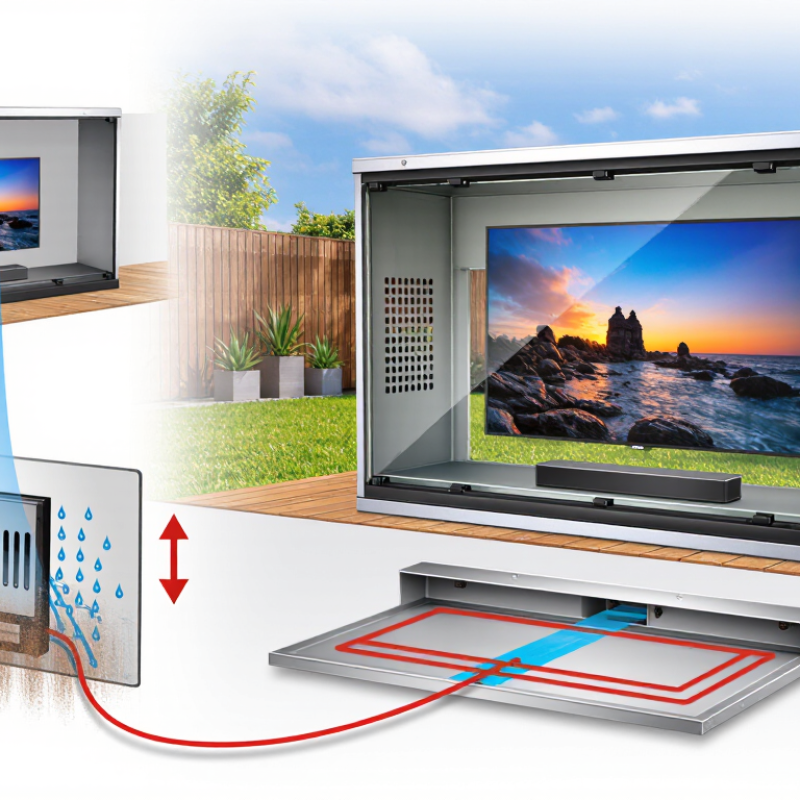
An outdoor TV enclosure cabinet is a protective housing built around a television used outside. It helps block rain, dust, insects, and accidental bumps while allowing the screen to remain visible. Think of a covered patio where wind pushes fine grit beneath the roof. A suitable enclosure can reduce exposure, but it cannot make every installation weatherproof.
Most cabinets use a sealed front panel, a rigid shell, and internal space for cables and ventilation. The front panel should preserve picture clarity, though direct sunlight can still cause glare. Ventilation matters, too. Electronics produce heat, and a tightly closed cabinet may trap it on a warm afternoon. Some designs use fans or temperature controls; others depend on passive airflow. Check the manufacturer’s stated operating limits rather than assuming the cabinet suits every climate.
Fit is practical, not cosmetic. Measure the TV, including its depth and cable connections, and leave room for airflow and service access. Inspect seals and mounting points periodically, especially after storms or seasonal temperature changes. A cabinet may help protect equipment, but it is not a guarantee against water entry, condensation, or heat damage. That distinction is easy to overlook. A shaded, well-positioned installation often matters as much as the enclosure itself.
2026 Best TV Enclosure Cabinet for Outdoor TVs: What Is an Outdoor TV Enclosure Cabinet?
Compare common IP ratings to understand the dust and water protection an outdoor TV enclosure may provide.
Under IEC 60529, the first IP digit describes protection against solid particles and the second describes protection against water. For example, IP65 is dust-tight and tested against water jets; IP66 is dust-tight and tested against more powerful water jets. IP ratings do not by themselves indicate UV resistance, temperature range, or protection from condensation, so check the enclosure’s full specifications and installation requirements.
How Outdoor TV Enclosures Protect Screens from Weather and Impact
An outdoor TV enclosure acts as a barrier between a screen and changing conditions, not a promise that weather can never get inside. A tight-fitting door and intact gasket help keep wind-driven rain, dust, and insects away from ports and controls. Look for corrosion-resistant hardware, UV-stable materials, and a clear front panel suited to outdoor sunlight. Small details matter.
Heat is the catch. A TV produces warmth, while direct sun can raise the temperature inside a cabinet. Ventilation or temperature-controlled fans help move hot air out, but vents must be designed to limit water entry. Check the enclosure’s stated temperature range against your local conditions. A shaded wall can make a real difference, too.
Impact protection depends on the front panel, cabinet strength, and mounting—not just a product label. A sturdy enclosure can help guard against stray balls, falling twigs, and accidental bumps, but it is not necessarily designed for severe impacts. Secure the mount to suitable structural support, and inspect seals and fasteners periodically. No enclosure is magic. Even a well-built cabinet can fog or overheat if airflow is poor, so monitor it after installation and adjust the setup when needed.
Key Features to Compare in 2026
2026 Best TV Enclosure Cabinet for Outdoor TVs?
Key Features to Compare in 2026
When comparing outdoor TV enclosure cabinets, start with the conditions around your screen. A covered patio faces different risks from an open deck with wind-driven rain. Check the cabinet’s stated weather-resistance rating, then compare it with your actual exposure. Look for corrosion-resistant materials, secure door seals, and a design that allows heat to escape. A sealed cabinet can still overheat in direct afternoon sun.
Fit matters, too. Measure the TV, including its depth and cable connections, and confirm the cabinet leaves room for ventilation and service access. Compare glare reduction and viewing angles from your usual seats. These details are easy to overlook. They can matter more than a sleek finish.
Tips: Measure twice, including cable clearance. Check how the door opens. Read the installation requirements.
Also compare cable-entry placement, mounting options, and access to controls. A cabinet should keep connections protected without pinching wires or making routine adjustments awkward. Some features sound useful on paper but may not suit your patio layout. There is no single best enclosure for every setup; the right choice depends on exposure, screen size, and how often you need access. Verify specifications rather than relying on broad claims like “all-weather.”
Choosing the Right Enclosure for Your TV, Location, and Budget
2026 Best TV Enclosure Cabinet for Outdoor TVs?
Choosing the Right Enclosure for Your TV, Location, and Budget
Choose for the location, not just the screen size. Measure the TV and note wall exposure, viewing distance, and nearby sprinklers. NOAA’s 1991–2020 U.S. Climate Normals use a 30-year baseline for temperature and precipitation. Check local conditions before deciding how much protection and ventilation you need. A covered patio still gets humid. Shade helps, but wind-driven rain can reach the screen.
Match the enclosure to the exposure. A sheltered porch may need less protection than an open deck facing rain, dust, and temperature swings. Check enclosure claims against IEC 60529 IP ratings, and confirm what each rating covers. IP ratings do not by themselves confirm impact resistance or safe operating temperatures. Small detail. Big difference.
Budget for the complete installation: cabinet, mounting hardware, ventilation, cable entries, and service access. A tightly sealed cabinet can trap heat, while an oversized one may complicate mounting and viewing. Leave room for airflow and maintenance. I would not choose by price alone; it is easy to pay for extra weather protection and still overlook glare. Check the TV’s suitability for outdoor use, then select an enclosure for the conditions it will actually face.
Installation, Ventilation, and Maintenance Requirements
Choosing an outdoor TV enclosure cabinet is only part of the job. Installation affects heat, moisture exposure, and long-term reliability. Mount the cabinet on a surface rated for its weight, and use the specified fasteners. Check that the screen remains easy to reach for service. Keep the enclosure away from sprinklers and roof runoff. A sheltered spot helps, but it does not replace weather-rated components.
Air needs room. Follow the cabinet’s required clearances, and never block intake or exhaust vents with cables, trim, or stored items. Restricted airflow can raise internal temperatures, especially in direct afternoon sun. If the enclosure uses fans, confirm that they operate and that their filters stay clean. Use only a TV approved for the enclosure’s stated temperature range. A cabinet that feels cool outside may still hold heat inside.
Route cables through the designed entry points and preserve every gasket and seal. Have electrical connections installed for the outdoor conditions, with suitable protection against moisture. Small gaps matter. Check the cabinet monthly for dust, insects, cracked seals, loose hardware, and signs of condensation. Switch off power before cleaning, and use a soft cloth rather than spraying water into vents. One easy mistake is treating a sealed cabinet as maintenance-free. It is not; a quick inspection can reveal a failing fan or seal before the picture starts cutting out.