
Blog

2026 Best Feather Flags for Global Buyers?

In 2026, Feather Flags remain a practical choice for retailers, exhibitions, hospitality venues, and outdoor campaigns. Their slim poles, teardrop fabric, and moving graphics attract attention without blocking entrances or walkways. WARC reported that global advertising investment passed US$1 trillion in 2024, while out-of-home advertising continued gaining relevance. This broader trend supports demand for flexible, reusable display products.

However, Feather Flags are rarely measured as a separate market category. That matters. Buyers should not mistake general outdoor advertising growth for guaranteed flag sales. FESPA’s Print Census 2023 found that 68% of print businesses expected production volumes to increase, showing continued confidence in visual communication. Yet fabric quality, wind performance, and finishing still decide whether a flag works beyond the showroom.

Mark Coudray, a recognized printing-industry consultant, offers a useful principle: “Choose the substrate and finishing for the environment, not the showroom.” His point is easy to test. A beachside flag needs UV-resistant fabric, reinforced stitching, and a stable base. A shopping-mall display may need lighter hardware and cleaner edges. Small details matter.

Not every supplier publishes verified test data. That is a weakness. Global buyers should request fabric weight, pole material, print method, color-management information, packaging dimensions, and replacement-part availability. The best 2026 Feather Flags will not simply look bright in photographs. They will remain readable, stable, and economical after repeated transport and outdoor use.
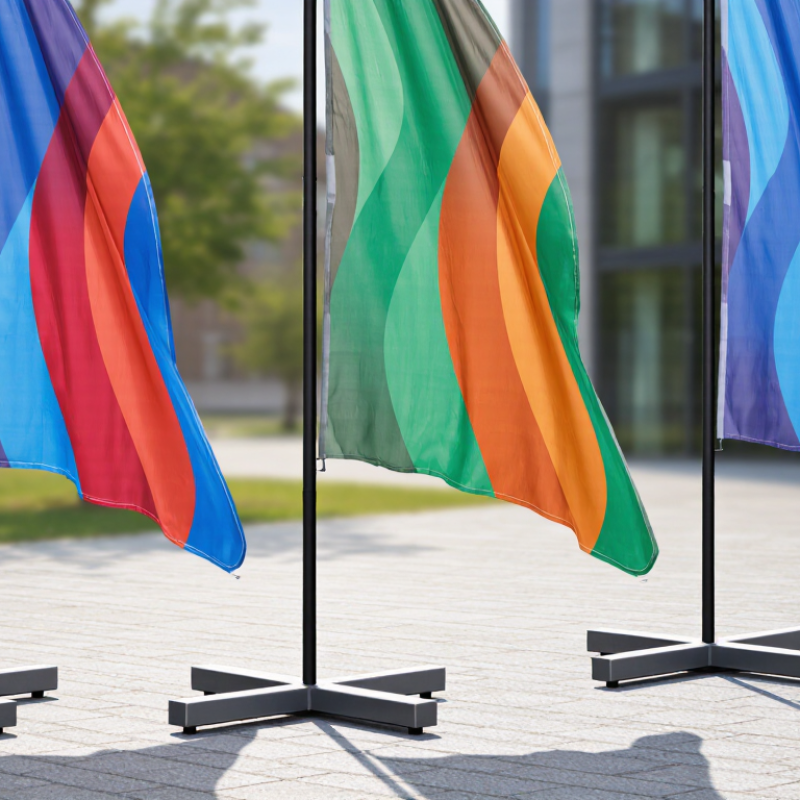
2026 Best Feather Flags for Global Buyers?

What Are Feather Flags and How Do They Work?

2026 Best Feather Flags for Global Buyers?

What Are Feather Flags and How Do They Work?

Feather flags are tall fabric signs shaped like a narrow feather or curved blade. A flexible pole supports the printed polyester fabric from the bottom upward. Unlike rigid boards, the flag moves with passing air and remains visible from changing angles. It can still attract attention on calm days.

The working system is simple. A sewn sleeve holds the pole, while a ground base keeps the display upright.

Common bases include cross feet, water-filled containers, and ground spikes. Choose according to the surface. A spike suits soil, but it performs poorly on concrete. A water base is steadier, although transport becomes less convenient.

In practical use, the fabric should be tightly printed and stitched around stress points. Outdoor testing has shown that weak seams often fail before the graphic fades.

Weather resistance also depends on ink, fabric weight, and drying after rain. Buyers should check packed dimensions, replacement parts, and wind guidance before ordering internationally.

Specifications can look excellent on paper, yet assembly may feel awkward in real conditions. That detail is easy to overlook. A clear, high-contrast message usually works better than crowded artwork, especially when people view the flag from moving vehicles or across a busy entrance.

Key Feather Flag Types and Materials for Global Buyers

For global buyers, feather flag selection begins with shape, wind behavior, and installation space. Teardrop flags keep their message visible when the fabric slackens. Straight flags provide a larger rectangular print area. Convex and concave styles create stronger movement, but their curved seams require tighter production control. The Outdoor Advertising Association of America reported US out-of-home advertising revenue of about $9.1 billion in 2023. This figure supports continued demand for portable visibility tools, including event flags and roadside displays.

Material choice affects color, durability, and freight cost. Knitted polyester is widely used because its open structure allows wind passage and reduces stress on the pole. Higher-density polyester gives sharper graphics, although it adds weight. Blockout fabric improves reverse-side separation for demanding artwork, but it may dry more slowly after rain. Textile Exchange’s Materials Market Report 2024 estimated polyester represented roughly 59% of global fiber production in 2023. That scale supports stable sourcing, yet it also raises recycling questions.

Pole systems usually combine fiberglass sections with aluminum bases or ground spikes. Fiberglass bends under gusts, while aluminum offers useful strength at the base. For repeated outdoor use, buyers should request fabric weight, stitching details, UV testing, and replacement-part availability. In practice, printed samples can look excellent indoors but lose contrast under direct sunlight. That lesson is easy to miss. Specifications should also state packed dimensions, washing guidance, and tested wind conditions. Cheap fabric is not always economical; frequent reprinting can erase the initial savings.

2026 Best Feather Flags for Global Buyers? - Key Feather Flag Types and Materials for Global Buyers

Feather Flag Type Typical Overall Height Flag Shape and Coverage Common Flag Fabric Typical Pole Material Best Applications Weather and Wind Considerations Global Buyer Selection Notes
Standard Feather Flag Approximately 2.5–5.0 m Long, curved profile with a narrow lower section; provides a tall advertising area. Knitted polyester, commonly around 110–130 g/m² Fiberglass or a fiberglass-and-aluminum combination Retail entrances, trade shows, outdoor promotions and roadside advertising Designed to flex in moving air; should be secured with a suitable base and removed or lowered during severe weather. Check packed length, pole-section connection, fabric size tolerance and replacement-part availability.
Small Feather Flag Approximately 1.8–2.5 m Compact feather profile with limited ground footprint and moderate visual height. Knitted polyester, commonly around 110–130 g/m² Fiberglass Indoor exhibitions, cafés, reception areas, small storefronts and temporary events Better suited to sheltered or moderate conditions because its shorter pole and smaller sail provide less visibility at a distance. Useful where shipping volume, storage space and indoor installation restrictions are important.
Large Feather Flag Approximately 4.5–6.0 m Extra-tall curved flag with a larger printed area and stronger long-distance visibility. Knitted polyester, commonly around 115–130 g/m² Fiberglass with reinforced connectors Outdoor festivals, car dealerships, sports venues, construction sites and large commercial areas Requires a heavier, properly rated base; tall installations experience greater leverage in strong wind. Confirm transport packaging, installation method, local height restrictions and spare pole-section supply.
Double-Sided Feather Flag Approximately 2.5–5.0 m Two printed panels or a block-out construction that allows different messages on opposite sides. Two polyester layers with an opaque or block-out interlayer Fiberglass or fiberglass with aluminum components Walkways, event entrances, shopping areas and locations viewed from two directions Usually heavier than a single-sided flag and may require a more stable base. Ask whether the design is readable from the reverse side and verify total packed weight before ordering.
Single-Sided Feather Flag Approximately 2.5–5.0 m One printed fabric layer; the image is normally visible in reverse with reduced color intensity. Knitted polyester, commonly around 110–130 g/m² Fiberglass Cost-sensitive campaigns, directional messages and one-way pedestrian or vehicle traffic Lightweight construction allows easy handling, but the printed reverse side may not provide the same visual impact. Often the most economical option; request a physical print sample when color accuracy is important.
Teardrop-Style Feather Flag Approximately 2.0–5.0 m Rounded, fuller lower profile that keeps the graphic area relatively stable when the fabric is tensioned. Knitted polyester, commonly around 110–130 g/m² Fiberglass Branding at entrances, hospitality venues, exhibitions and outdoor promotional areas The shape can remain legible in light to moderate wind; correct sleeve tension is important for appearance. Compare the actual finished graphic area rather than judging only by overall pole height.
Economy Polyester Feather Flag Approximately 2.5–4.0 m Standard curved feather shape with a lightweight construction. Lightweight knitted polyester, commonly around 90–110 g/m² Fiberglass Short-term promotions, seasonal campaigns and high-volume event use Suitable for temporary use in normal outdoor conditions; lighter fabric may show more movement and wear over time. Compare fabric weight, stitching quality, hem reinforcement and expected reuse cycle—not price alone.
Reinforced Outdoor Feather Flag Approximately 3.0–5.0 m Standard or teardrop profile with reinforced seams, pole pockets and stress points. Knitted polyester, commonly around 115–130 g/m², with reinforced edging Fiberglass with reinforced joints or aluminum hardware Repeated outdoor use, touring events, sports grounds and long-running promotions More durable than a basic construction, but no feather flag should be treated as a permanent structure or used in extreme weather. Request seam details, washing guidance, UV-resistance information and replacement-fabric compatibility.
Recycled-Polyester Feather Flag Approximately 2.5–5.0 m Available in common feather and teardrop profiles. Recycled knitted polyester; specification varies by supplier Fiberglass or aluminum-and-fiberglass construction Events and organizations with documented material-preference requirements Outdoor performance depends on fabric construction, coating, stitching and finishing—not recycled content alone. Request evidence for recycled content, product weight, colorfastness, printing process and end-of-life guidance.
Indoor Exhibition Feather Flag Approximately 2.0–3.5 m Compact profile optimized for display aisles and limited indoor floor space. Knitted polyester or display-grade polyester Fiberglass, aluminum or a mixed lightweight frame Trade fairs, conference halls, retail displays and reception zones Indoor use avoids rain and UV exposure; base stability remains important in busy walkways. Confirm venue height limits, floor-protection requirements, base dimensions and fire-safety documentation where required.
Buyer note: Dimensions, fabric weight, wind suitability and base requirements are typical industry ranges rather than universal specifications. Final performance depends on the finished pattern, stitching, pole system, base type, installation surface and local weather conditions. Always request a technical drawing and installation instructions before placing a bulk order.

How to Compare Sizes, Shapes, Prints, and Base Options

2026 Best Feather Flags for Global Buyers?

Choosing a feather flag for 2026 starts with the site, not the artwork. Measure the visible area, walking distance, and overhead clearance before comparing suppliers. A 2.5-meter flag suits a small entrance, while a 4-meter model creates stronger roadside visibility. However, extra height can become difficult in narrow courtyards. Measure the site. Wind changes everything.

Feather shapes usually present a tall, curved message with good movement in light wind. Teardrop shapes offer a fuller lower area and often remain easier to read from the side. Rectangular designs provide more printing space but may catch stronger gusts. Keep wording short, use high-contrast colors, and check the print preview at full size. Ask whether the fabric is single-sided or double-sided. Some single-sided prints show a reverse image, which may weaken readability.

The base should match the ground and weather conditions. Ground spikes work well in soil, grass, and compact outdoor areas. Cross bases suit hard floors, but they need water or sand weights for stability. Heavy plate bases are more practical for paved entrances and repeated commercial use. For global shipping, confirm pole sections, packed dimensions, replacement parts, and assembly instructions. I once chose a taller flag for visibility and underestimated transport space. That mistake still influences my buying checklist. A smaller flag may perform better when setup is frequent.

Global Standards, Customization, and Shipping Considerations

For global buyers, feather flags should be specified as temporary textile signage, not simply decorative products. UFI’s Global Exhibition Barometer reported that exhibition revenues were expected to exceed 2019 levels in 2024, increasing demand for portable displays. That growth makes consistency important. Ask for fabric weight, finished dimensions, seam construction, UV resistance, and a replacement policy. ISO 105-B02 testing can indicate lightfastness, while ISO 1833-based fiber analysis helps verify material claims. These tests are useful, but they do not guarantee identical outdoor performance.

Customization must match the destination. Artwork should use vector files, defined color references, and mirrored layouts where the reverse side matters. A sample print is still wise; digital proofs can hide color shifts under cloudy daylight. Hardware needs equal attention. Fiberglass poles, ground spikes, cross bases, and water weights suit different surfaces and wind conditions. There is no single worldwide wind rating for every feather flag, so suppliers should provide test methods and operating limits.

Shipping often creates the biggest surprise. Confirm the packed length, carton dimensions, net weight, gross weight, and replacement-part availability before ordering. HS classification can vary by product composition and national customs practice. Agree on Incoterms, import responsibilities, and required documents in writing. WARC’s Global Ad Trends has projected global advertising investment above one trillion US dollars, yet budget pressure remains real. A cheaper flag may become expensive after duty, dimensional freight, or damaged poles. I have seen buyers focus on printed fabric and overlook the base. That mistake is easy to repeat.

2026 Best Feather Flags for Global Buyers

Common reference heights, metric conversions, customization, and shipping considerations

Global Sizing

Metric conversions are shown beside common imperial height tiers. Buyers should confirm local venue limits and installation clearance before ordering.

Customization

Request artwork in a vector format, specify single- or double-sided printing, and confirm pole, base, fabric, and carry-bag requirements.

Shipping Planning

Packed length, volumetric weight, destination duties, and customs documentation can affect landed cost more than flag fabric weight alone.

How to Choose the Best Feather Flag for Your Market

2026 Best Feather Flags for Global Buyers

How to Choose the Best Feather Flag for Your Market

Choosing a feather flag begins with the location, not the artwork. I have seen attractive flags fail because their fabric could not handle strong coastal wind. Check local weather, ground conditions, and expected display hours. Polyester is popular for outdoor use, but fabric weight and stitching still matter. A reinforced sleeve can reduce tearing around the pole. Choose a flexible fiberglass or aluminum pole based on transport needs and wind exposure. Always confirm the base fits grass, concrete, sand, or indoor flooring.

Tips: Use bold text and one clear message. Test the design from ten meters away. Match colors with local visibility conditions. Dark lettering often performs better under bright sunlight. For multilingual markets, avoid crowded translations. Leave enough empty space. Small details disappear quickly.

Print quality affects trust. Ask for color samples before ordering large quantities. Request information about UV resistance, washing instructions, and replacement parts. I once approved a sample that looked excellent indoors but appeared dull outside. That mistake was avoidable. Consider packaging size, shipping weight, and regional import requirements before selecting the final model. A practical flag should be easy to assemble, stable during use, and simple to store after an event. The cheapest option is not always the most reliable.