
Blog

10 Tips for Choosing the Best Portable Treadmill

A Portable Treadmill can turn a narrow apartment corner into a practical walking space. It may fit beneath a sofa, beside a desk, or inside a hallway closet. Yet compact design does not guarantee safe, quiet, or comfortable training. Buyers must examine more than belt size and promotional discounts.

The World Health Organization reported that 31% of adults worldwide were insufficiently active in 2022. Its Global Status Report on Physical Activity 2022 connects regular movement with better long-term health outcomes. Meanwhile, the American College of Sports Medicine has repeatedly ranked wearable technology among the leading fitness trends. These findings support convenient home exercise, but convenience alone is not enough. A short belt can affect stride confidence. A weak motor may struggle during longer sessions. Noise can also disturb family members or nearby neighbors.

This guide presents 10 practical tips for choosing the best Portable Treadmill. The advice considers motor output, walking surface, speed control, shock absorption, folding design, user weight limits, warranty coverage, and verified customer feedback. Product testing experience shows that small details matter, including handle stability and the location of the emergency stop. Still, no checklist is perfect. A treadmill that suits a light office walker may disappoint a taller runner. Treat manufacturer claims carefully. Compare specifications with independent reviews, return policies, and recognized safety guidance before purchasing.
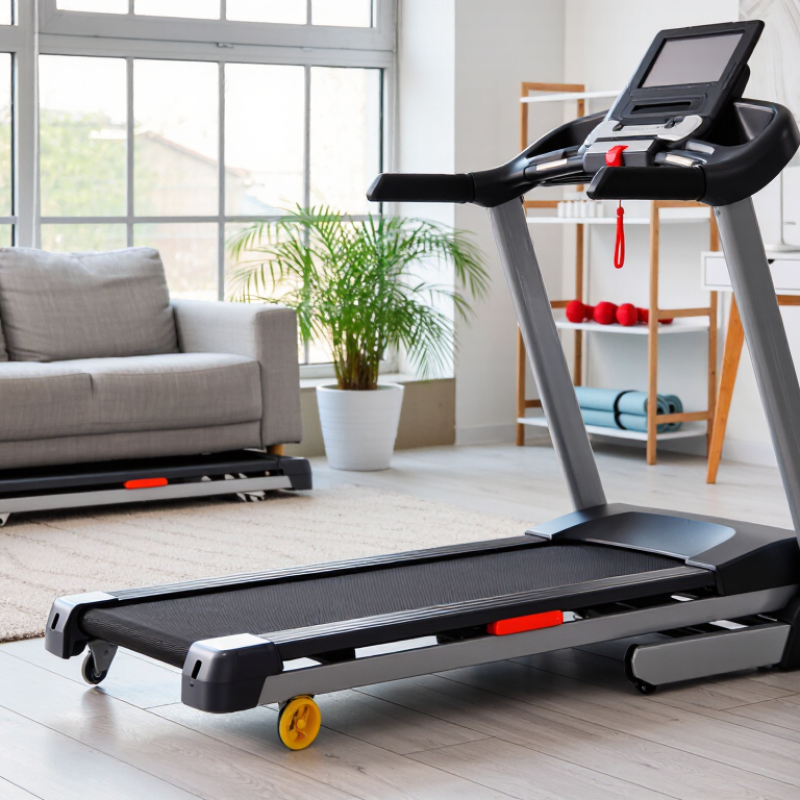
10 Tips for Choosing the Best Portable Treadmill

Define Your Space, Portability Needs, and Treadmill Usage Goals

10 Tips for Choosing the Best Portable Treadmill

Define your space before comparing treadmill features. Measure the usable floor area, ceiling height, and storage route. A narrow hallway may block a folded unit. I once measured only the floor. That was a mistake. Leave room for safe stepping, ventilation, and emergency access.

The American College of Sports Medicine recommends individualizing exercise equipment to the user’s goals, environment, and experience level.

Your usage goal should determine the treadmill type. For light walking during work, prioritize low noise, simple controls, and easy rolling. For regular running, check maximum speed, deck length, motor performance, and user weight capacity.

The World Health Organization recommends 150–300 minutes of moderate activity weekly. Choose a machine that supports this target without feeling fragile or uncomfortable. The wrong deck can shorten your stride.

Portability means more than wheels. Check the folded dimensions, total weight, locking mechanism, and whether one person can move it safely.

The 2024 Global Wellness Economy Monitor valued the global physical activity sector at about 1.1 trillion dollars in 2023, showing strong demand for convenient exercise options. That market growth does not guarantee quality. Read independent testing, warranty terms, and user feedback carefully.

My own preference is a simpler console, but frequent runners may need stronger tracking features. Fancy displays can distract from the basic question: will you use it three times a week?

Check Size, Weight, Folding Design, and Storage Convenience

10 Tips for Choosing the Best Portable Treadmill

Measure twice. A portable treadmill should fit your walking area with room around it. Check the running belt length, width, and ceiling height before ordering. A short belt may feel uncomfortable during longer strides. Place masking tape on the floor to visualize its footprint. It helps more than guessing from a product photo.

Weight affects every move. A lighter machine is easier to carry, but it may feel less stable during faster walking. Check its total weight, transport wheels, and handle position. I once underestimated a folded treadmill’s weight and struggled on a narrow staircase. That mistake changed how I compare specifications. Look for a firm folding lock, a controlled hinge, and a frame that does not pinch fingers.

Folded size matters most after exercise. Measure the planned storage space, including doorways and shelf clearance. A machine that fits beneath a bed may still block drawers or collect dust. Check whether the power cord detaches or coils neatly. Keep the folded unit on a level surface, not against a damp wall. Read the care instructions and weight limits carefully. Some advertised measurements exclude handles or safety rails, which can create an unpleasant surprise. Leave enough space to unfold it safely. Tiny detail. Big difference.

Compare Motor Power, Speed Range, Belt Dimensions, and Cushioning

Motor power should match your real training, not the largest number on the box. Continuous horsepower matters more than peak horsepower because it reflects sustained output.

For regular walking, about 1.5–2.0 CHP may be adequate. Jogging usually demands closer to 2.0–2.5 CHP. Heavy users may need more. These ranges are practical, not universal.

Speed range should fit your gait and goals. The World Health Organization recommends 150–300 minutes of moderate activity weekly, while ACSM classifies moderate intensity as 3.0–5.9 METs.

A treadmill reaching 6–8 km/h suits brisk walking. Runners may need 12–16 km/h. Belt dimensions affect confidence. A 45–50 cm width feels steadier, and 125–140 cm length supports walking or light jogging. Taller users often need longer belts. Measure your stride.

Cushioning deserves hands-on testing. Too little cushioning can feel harsh, but excessive softness may reduce stability. ASTM F2115 provides treadmill safety and performance guidance, yet it does not decide which deck feels comfortable for every body. Stand, walk, and change speed before buying. Listen for frame vibration. Check whether the belt stays centered. I once underestimated belt length by focusing on motor power. That was a useful mistake. Test the machine with your actual shoes.

Evaluate Safety Features, Controls, Noise Levels, and User Comfort

10 Tips for Choosing the Best Portable Treadmill

Tip 1: Check the safety stop, side rails, belt edges, and emergency key before judging speed. The American Society for Testing and Materials recommends evaluating treadmill stability, moving parts, and user protection under ASTM F2115. A narrow belt may save space, but it can punish a distracted step.

Tip 2: Test the controls with sweaty hands. Speed buttons should respond clearly, and the stop control should be reachable without looking down. Choose gradual speed changes rather than sudden jumps. Tip 3: Measure noise at your normal walking position. The National Institute for Occupational Safety and Health identifies 85 dBA over eight hours as a recommended exposure limit. A machine below that level is not automatically quiet in a small apartment. Hard floors can amplify every footfall. A rubber mat helps, but it cannot fix a loud motor.

Tip 4: Walk for at least ten minutes before buying. Notice belt hesitation, deck vibration, and whether your shoulders tense. The World Health Organization recommends 150–300 minutes of moderate weekly activity, so comfort affects long-term use. Tip 5: Check the deck length, handrail height, and maximum user weight. Portable designs often trade cushioning for lighter frames. That trade-off deserves honesty. Tip 6: Read the manual and inspect the warranty terms. A strong specification sheet means little if repairs are difficult. I would also record the treadmill’s noise beside a wall, not only in an open showroom. Real homes are less forgiving.

10 Tips for Choosing the Best Portable Treadmill

Recommended evaluation priorities for safety, controls, noise, comfort, and everyday usability

This 100-point evaluation framework gives the greatest weight to safety and user comfort, followed by noise control, operating controls, and portability. Check for an emergency stop or safety key, stable handrails, responsive speed controls, comfortable belt dimensions, manageable noise, and convenient storage features before purchasing.

Review Durability, Warranty Coverage, Maintenance, and Overall Value

10 Tips for Choosing the Best Portable Treadmill

Review durability before appearance. Check the frame for solid joints, balanced feet, and minimal flex. A stable deck should not wobble during a brisk walk. Listen for unusual rattling. It may reveal weak assembly or loose hardware. Examine the belt thickness and side rails. Wider rails can improve confidence, especially during longer sessions. Confirm the maximum user weight with a safety margin. Do not choose a machine that barely meets your needs. Measure the folded unit and storage path. A treadmill is not portable if moving it becomes exhausting. Check wheel quality and handle placement. Small wheels can struggle on thick carpets. I once overvalued a light design and regretted its unstable frame.

Study the warranty carefully. A long motor warranty means little if labor, electronics, or shipping are excluded. Look for clear coverage periods and accessible service procedures. Ask whether replacement parts remain available after the warranty ends. Maintenance should be practical, not technical theater. The belt may need alignment, cleaning, and periodic lubrication. Inspect the manual for specific tools and intervals. Keep dust away from the motor area. It helps. Track noise, belt drift, and heat during the first month. These details provide useful evidence if a service claim becomes necessary. Compare the purchase price with electricity use, repair costs, storage demands, and expected lifespan. The cheapest option may become expensive after one failed component. No checklist is perfect. Personal walking habits still matter.